Author: admin

  • DJ Studio Hire London vs Your Bedroom Setup: When Does the Upgrade Actually Pay for Itself?

    DJ Studio Hire London vs Your Bedroom Setup: When Does the Upgrade Actually Pay for Itself?

    If you search for DJ studio hire London, you’ll find everything from small practice rooms to full-scale creative spaces.

    They are not the same thing.

    A bedroom setup gives you unlimited access. A professional studio gives you the right gear, controlled acoustics, room to move, and a backdrop that already looks finished.

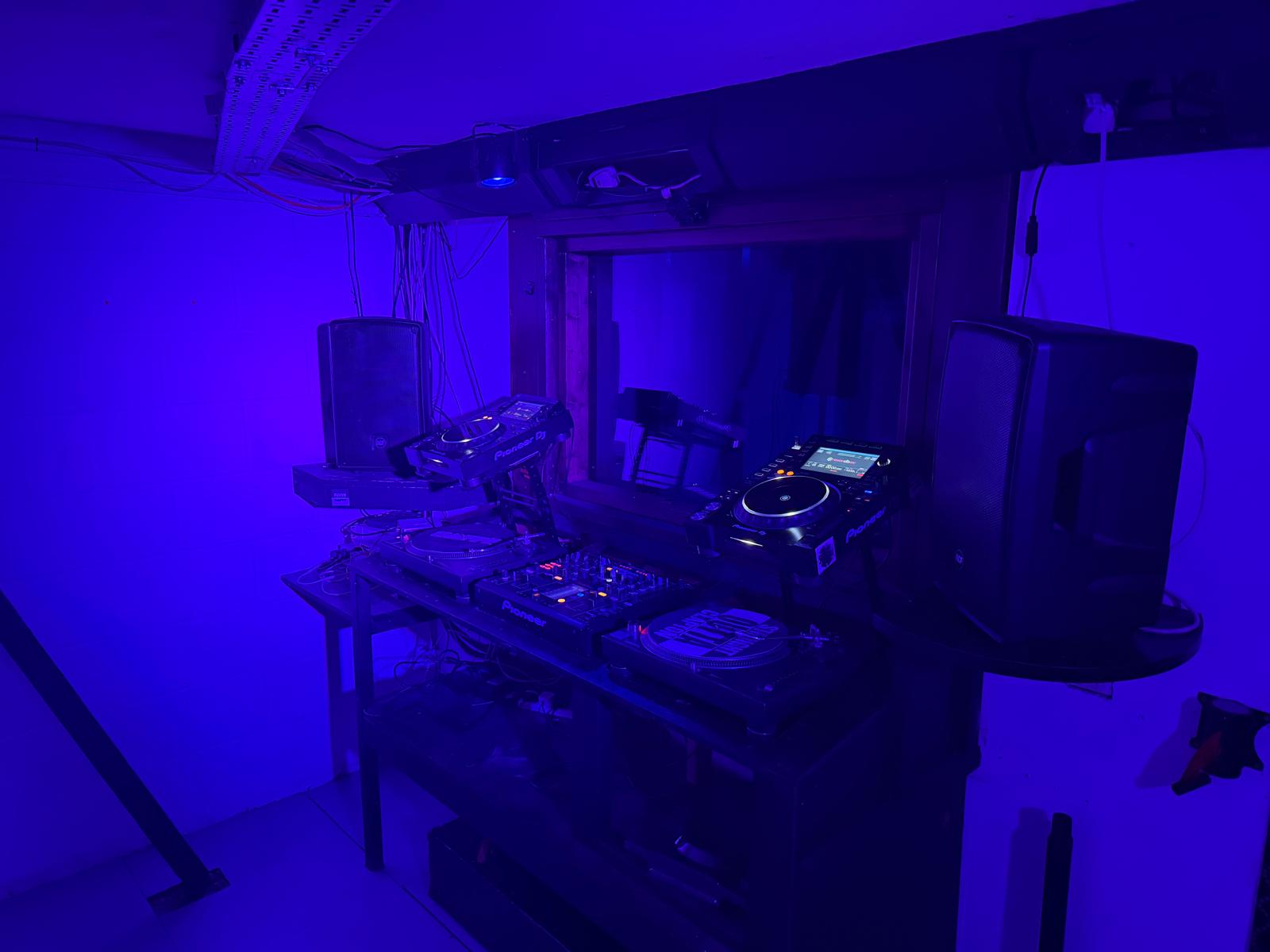
    At @38, DJ studio hire starts from £600 for up to 4 hours on the exclusive main floor. That includes Pioneer CDJ multi-players, turntables, a professional DJ mixer, full PA and monitor system, and the atmospheric lighting rig.

    Clapton E5. No set build required. We respond within 24 hours.

    So when does the upgrade actually pay for itself?

    Start with the bedroom setup

    Your bedroom is convenient. That is the main advantage.

    You can mix for 20 minutes before work. Record a rough idea at midnight. Practice the same transition until it stops sounding like an accident.

    You do not need to travel. You do not need to book a slot. You do not need to watch the clock.

    The cost depends on how far you take it.

    A realistic home DJ setup

    If you already have a laptop, a usable bedroom rig might include:

    • DJ controller: £250–£600
    • Studio monitors: £150–£350
    • DJ headphones: £50–£150
    • Cables, stands and desk equipment: £100–£200
    • Basic acoustic treatment: £100–£300

    That puts a typical setup between £650 and £1,600.

    It is enough for learning, regular practice, home mixes and low-volume streaming. You can build it gradually. Start with the controller. Add monitors later. Treat the room when you understand what the room is doing to your sound.

    A club-standard bedroom setup is a different calculation.

    Two used Pioneer CDJs and a professional mixer can take you into the £3,500–£5,000+ range before you add better monitors, acoustic treatment and furniture. New flagship decks push the number higher.

    That is a lot of money to spend on equipment that might still be squeezed between your bed and a clothes rail.

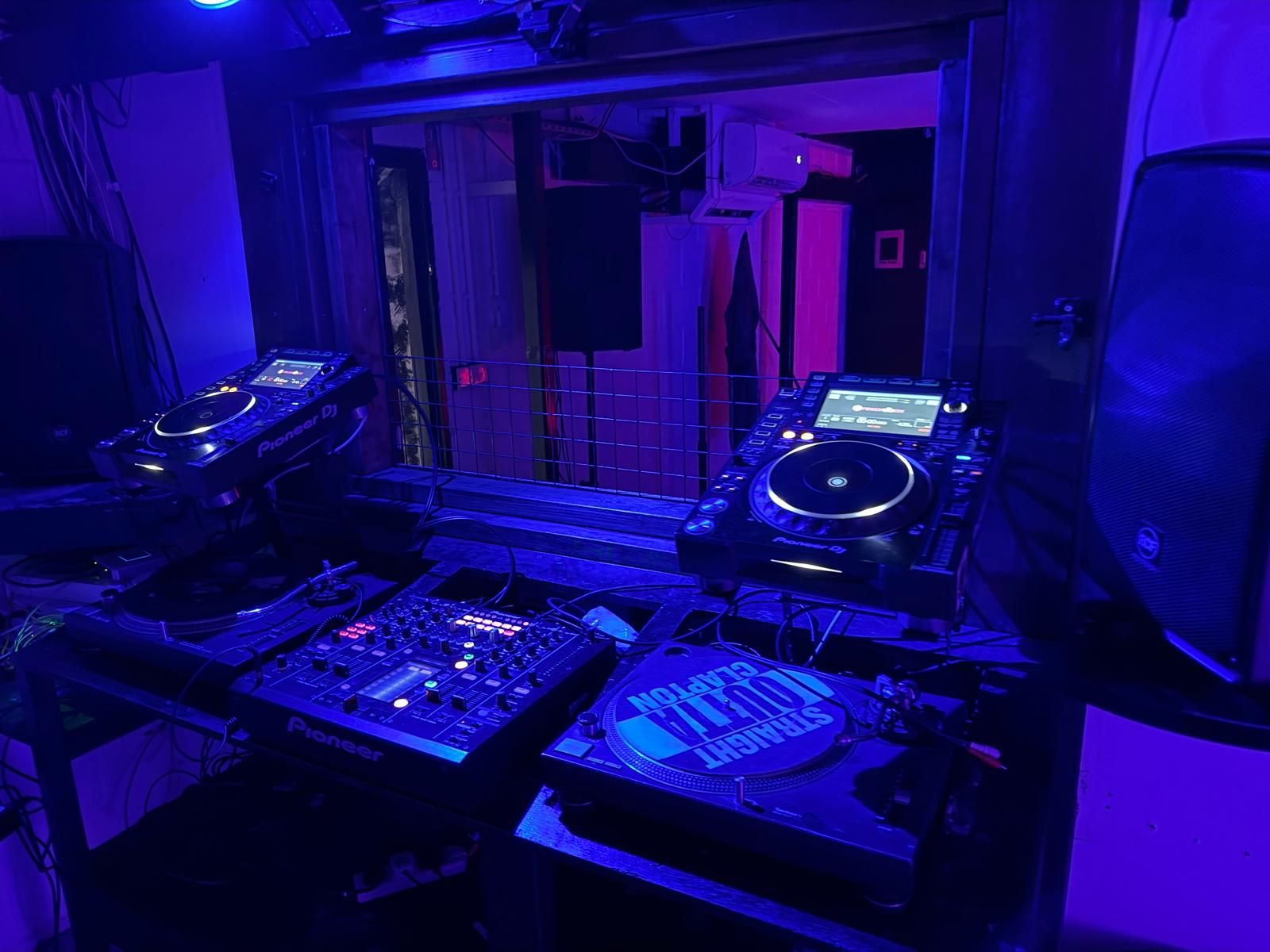
    Professional Pioneer CDJ and turntable setup in a dark industrial @38 studio

    What your bedroom gives you : and what it does not

    1. Unlimited access

    This is where home wins.

    If you practice several times a week, the value is obvious. You can build muscle memory without paying for every hour. You can test a new playlist, stop, come back, and change direction.

    That freedom matters.

    A studio booking is focused time. Home is where you develop the habit.

    2. Limited acoustics

    Most bedrooms are not designed for accurate monitoring.

    Parallel walls create reflections. Corners exaggerate bass. Desks vibrate. One side of the room may sound louder than the other. You move your head a few inches and the mix changes.

    Soft furnishings help. Rugs, curtains and sofas absorb some reflections. Basic panels can improve the first reflection points. Bass traps can help with low-end buildup.

    But foam stuck to the wall will not turn a bedroom into a professional room.

    You can still practice effectively at home. Use headphones when necessary. Keep your monitor volume sensible. Learn the room instead of trusting it blindly.

    For recording a final mix, preparing for a serious set or playing at full volume, a purpose-built space gives you a cleaner reference.

    3. Space limits

    A bedroom setup is usually designed for one person.

    Maybe two, if nobody needs to open the wardrobe.

    That becomes a problem when you want to:

    • Play back-to-back with another DJ
    • Add a third deck
    • Use turntables alongside digital players
    • Bring a camera operator
    • Record a proper video
    • Host a small team
    • Test a live set with full sound

    The equipment may fit. The production usually does not.

    4. A background that looks like a bedroom

    There is nothing wrong with a bedroom. It is just not always the image you want attached to the set.

    If you are recording content for a release, promoting a night, building a press kit or streaming a performance, the visual environment becomes part of the work.

    White walls, cables and laundry in the background make the viewer notice the room.

    A raw industrial space gives them something else to look at.

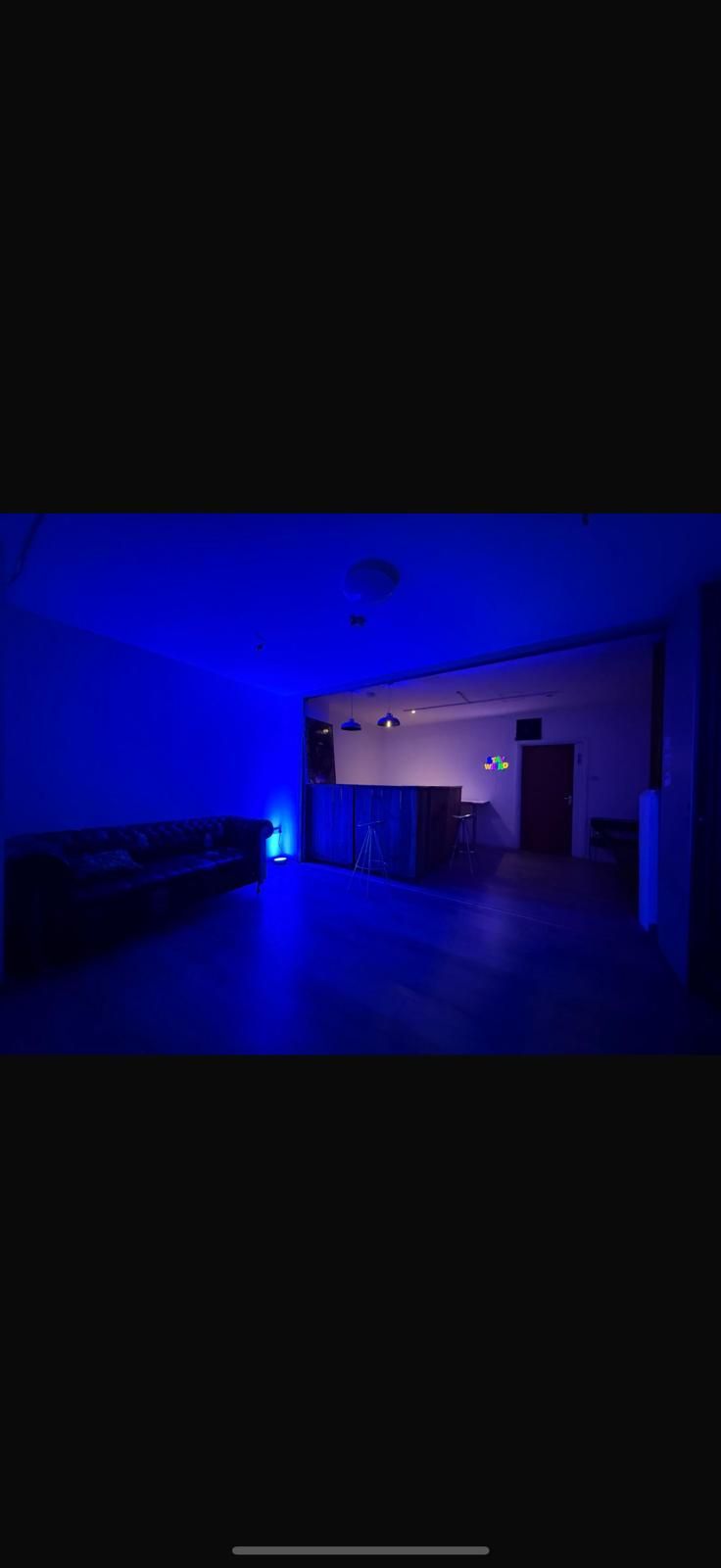
    Dark industrial lounge corner at @38 with blue lighting and space for content production

    What professional DJ studio hire changes

    The first difference is simple.

    You arrive. The rig is ready.

    At @38, the main floor includes:

    • Pioneer CDJ multi-player decks
    • Turntables for vinyl sets
    • Professional DJ mixer
    • Full PA and monitor system
    • Controlled acoustics
    • Atmospheric red, purple, teal and blue lighting
    • Viewing window from the adjacent room for livestream cameras
    • 170-person capacity
    • Full exclusivity, with no other bookings

    You are not paying to borrow a controller in a room with a desk.

    You are booking a complete stage for a rehearsal, recording, livestream or event.

    See the full DJ setup at @38.

    The cost comparison

    Here is the honest version.

    If your goal is daily practice, a bedroom setup is usually better value.

    A £1,000 home rig can give you hundreds of hours of access. Even a basic London practice room at £10–£20 per hour will eventually cost more if you book every week.

    External studios such as Pirate’s East London rooms and Advanced Beats Studios show the range. You can find smaller rooms for focused practice, often with professional decks and mixers already installed.

    That is the right route if you need somewhere to drill transitions cheaply.

    @38 sits in a different category.

    The Main Floor half-day rate is £600 for up to 4 hours. The full-day rate is £1,100 for up to 8 hours.

    That means you are paying for:

    • The equipment
    • The full room
    • The acoustics
    • The lighting
    • The visual backdrop
    • The production space
    • Exclusive access
    • No set build
    • No additional backline hire
    • Enough room for a crew, cameras or a crowd

    At £600, one booking is not cheaper than buying a controller.

    That is not the point.

    The question is whether one focused booking replaces several separate costs.

    When the half-day pays for itself

    A professional session starts to make financial sense when you need more than practice.

    You are recording a finished set

    You could record at home. You may already do.

    But if the mix is for a label, promoter, press kit or public release, the room matters. So does the monitoring. So does the consistency of the setup.

    You want to spend the session mixing. Not fixing room noise, moving furniture or hiding a pile of clothes from the camera.

    You are creating video content

    A bedroom can produce good content with the right eye and enough control.

    It is also easy for every video to look the same.

    At @38, the raw industrial surfaces, steel structure, dark lighting and colour washes give you a finished visual language from the first shot. You can bring cameras in and start working. No temporary set. No printed backdrop. No day spent making a blank room look less blank.

    Raw metal staircase at @38 under red industrial lighting

    You are preparing for a club or event

    If the next booking has Pioneer CDJs, prepare on Pioneer CDJs.

    A controller can teach you the fundamentals. It may not reproduce the jog feel, workflow, layout or pressure of a club-standard booth.

    Use home practice to learn the music. Use a professional DJ studio to rehearse the performance.

    That distinction saves time.

    You are working with other people

    A producer. A vocalist. Another DJ. A camera operator. A brand team.

    The bedroom stops working quickly.

    A larger room lets people stand somewhere without blocking the monitors. It gives the camera more options. It makes back-to-back sets possible. It gives the session a start and an end.

    You need to play loud

    Neighbours change the calculation.

    If you live in a flat, loud practice is not always practical. You may spend most of the session monitoring through headphones and wondering whether the bass is translating.

    A controlled studio gives you room to work at proper volume without turning your building into an unwilling audience.

    The best setup is often both

    You do not need to choose between home and studio hire.

    Use your bedroom for frequency. Use the studio for impact.

    A practical combination looks like this:

    1. Build a reliable home setup for daily practice.
    2. Learn your music and prepare your USBs at home.
    3. Book a professional studio before important gigs.
    4. Use the larger room for recording, livestreams and video.
    5. Test your final set on the equipment you expect to use in public.

    This keeps the expensive studio time focused.

    You are not paying £600 to learn what beatmatching is. You are paying for a room that lets you execute the work properly.

    Three signs you have outgrown the bedroom

    You probably need DJ studio hire in London when:

    1. The room is now the problem

    You are spending more time moving furniture, managing reflections and hiding the background than mixing.

    2. The equipment is holding you back

    You keep thinking about the missing deck, the different mixer layout or the turntables you cannot fit at home.

    3. The next set has consequences

    You are recording something public. Preparing for a headline. Shooting content for a release. Hosting people. Working with a brand.

    That is when the environment becomes part of the result.

    Book the room when the work needs a stage

    A bedroom setup is for repetition.

    A professional studio is for the session that needs to land.

    @38 gives you the Pioneer setup, turntables, professional mixer, full PA and monitor system, controlled acoustics and a dark industrial backdrop in one booking.

    From £600 for up to 4 hours. Main Floor. Full exclusivity. Clapton E5.

    Book DJ @38 or check the full service details. We respond within 24 hours.

    When did you know you had outgrown your bedroom setup? Was it the acoustics, the gear, the lack of space : or the fact that every video looked the same?

    Comment below and tell us what changed. Then DM us or book your next session at at38.org.
  • Studio Recording in Hackney: The Pro Setup for Interviews, Livestreams, and Media

    Studio Recording in Hackney: The Pro Setup for Interviews, Livestreams, and Media

    A good recording needs more than a microphone and a quiet room.

    You need controlled acoustics. Broadcast-quality gear. Lighting that works on camera. Enough privacy to let the conversation move without interruption.

    That is what the dedicated studio room at @38 is built for.

    Based in Clapton E5, the room is designed for interviews, livestreams, corporate video, podcasts and media production. No white box. No temporary set build. No sharing the space with another booking while you record.

    Studio Room: From £175
    Half Day: Up to 4 hours
    Full Day: Up to 8 hours, from £300
    Location: Clapton · Hackney · London E5

    A recording studio that already has a look

    Most recording rooms solve one problem: sound.

    That matters. But if you are filming the session as well, the room becomes part of the production. The background, lighting and seating all appear in the final edit. A blank wall can make a strong conversation look like a video call.

    The @38 studio room gives you a visual starting point from the moment you arrive.

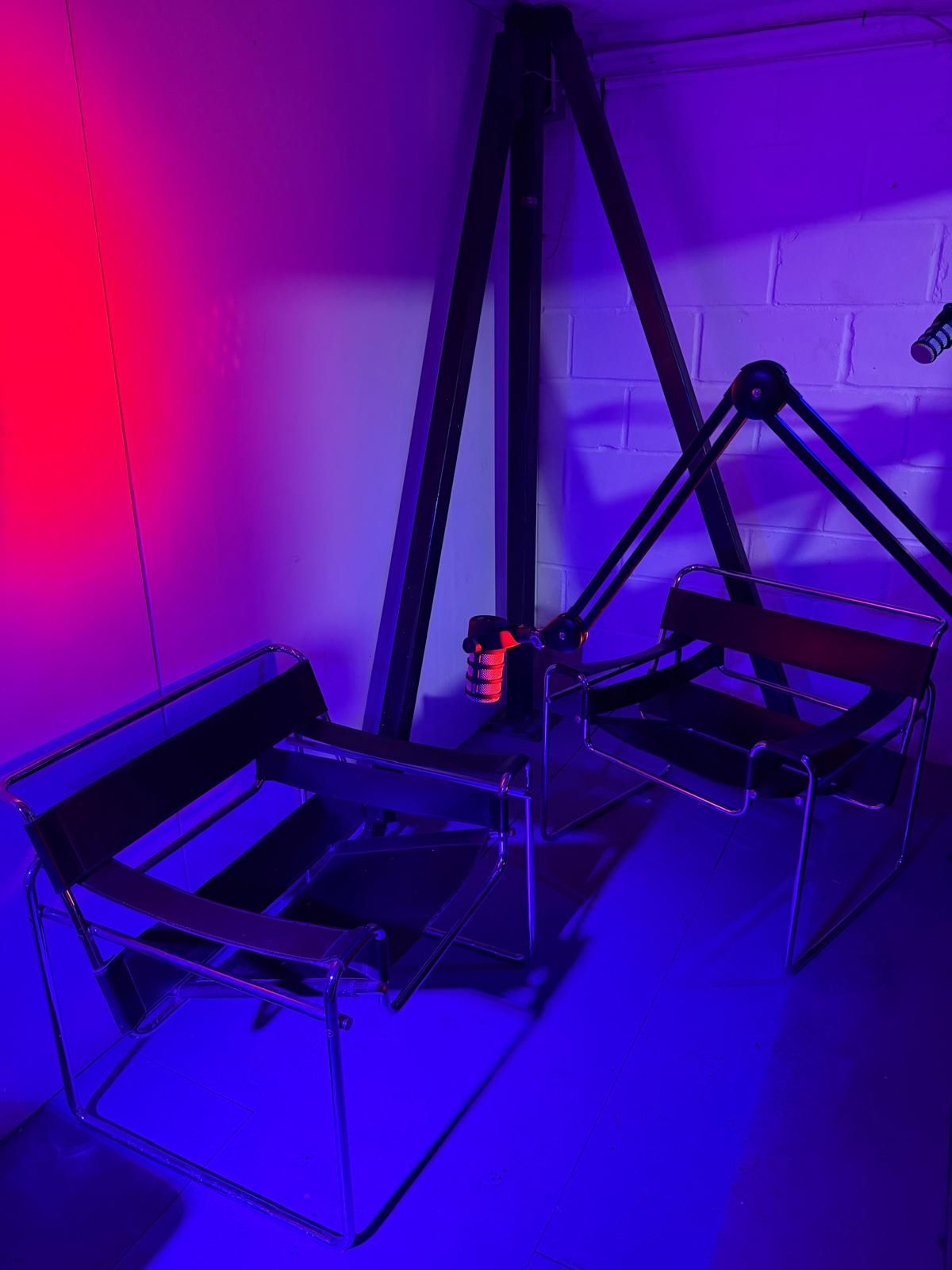
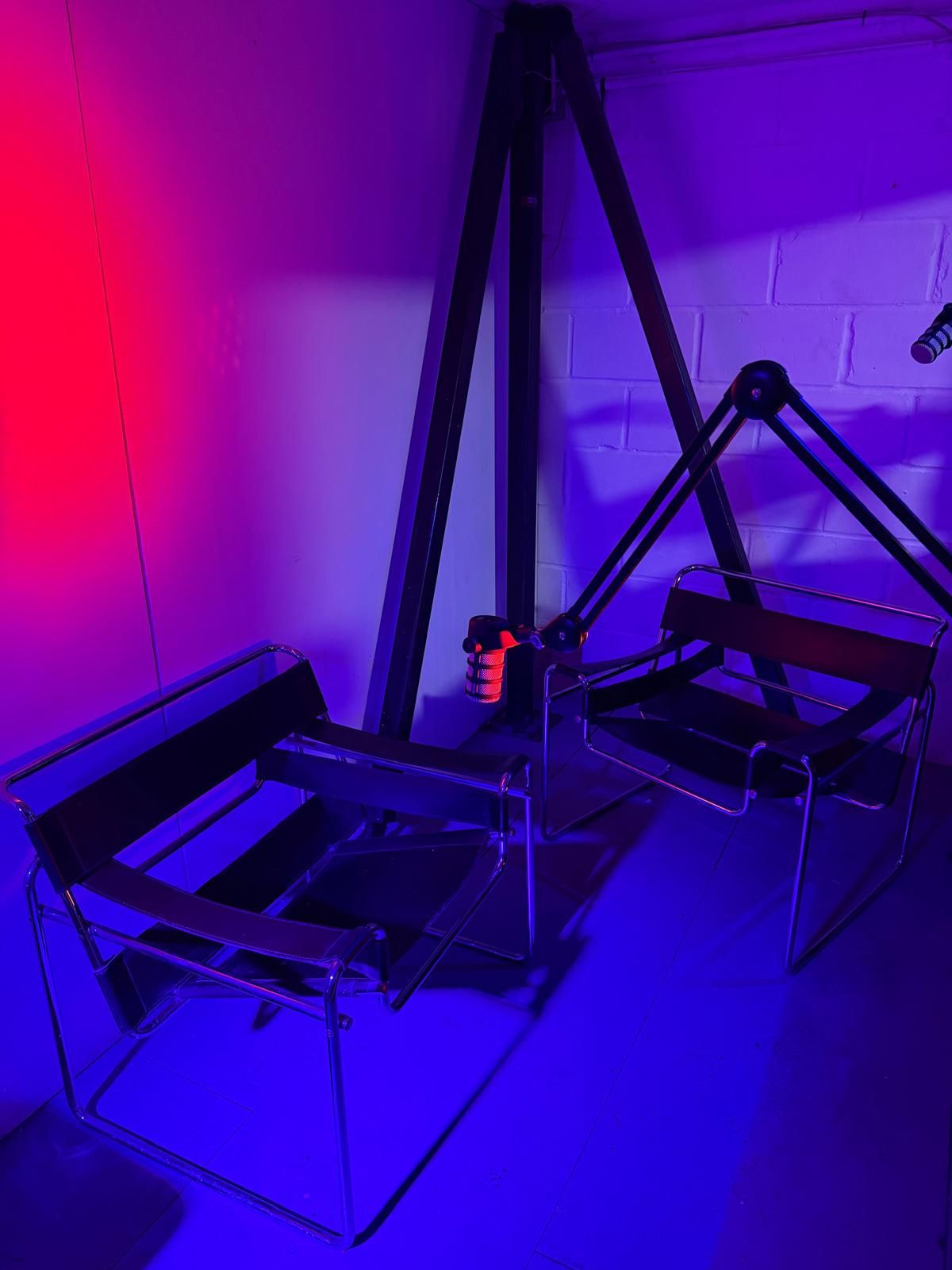
    Two Wassily chairs. Twin boom-arm microphones. Purple and red studio lighting. Dark industrial details around the frame.

    The room looks considered without looking over-designed. It gives your interview or livestream a clear identity before you add graphics, titles or branded overlays.

    Moody industrial lounge corner with exposed brick and red lighting at @38

    What you get in the dedicated studio

    The studio setup is designed to keep the recording process direct.

    • Twin broadcast-quality boom-arm microphones
    • Controlled acoustics for clean speech
    • Adjustable purple and red studio lighting
    • Two Wassily chairs for interviews and conversations
    • A dedicated room independent of the main floor
    • Full privacy during your booking
    • Access from 08:00, Monday to Sunday
    • Space for long-form conversations, solo shows and panel recordings

    The controlled acoustics help reduce the problems that make speech difficult to edit later: echo, room reflections and unwanted bleed.

    That gives you cleaner source audio from the first take. Less repair in post. More time focused on the conversation.

    For livestreams and filmed interviews, the lighting is already part of the room. You can work with the existing purple-red wash or bring your own camera and lighting team to shape it around the format.

    This is the useful difference between a room that is merely available and a room that is ready.

    For interviews that need room to breathe

    The best interview setup makes the guest forget the equipment is there.

    A mic should be close enough to capture clean speech, but not dominate the frame. Chairs should be comfortable enough for a long conversation. The room should feel private, not like a corridor between sessions.

    At @38, the two-chair layout gives you a straightforward interview format without making the conversation feel formal or stiff.

    Use the room for:

    • Founder and brand interviews
    • Artist conversations
    • Documentary-style talking heads
    • Podcast episodes
    • Panel recordings
    • Press and media content
    • Internal company interviews
    • Long-form creator formats

    The industrial background gives the frame some weight. It works for music, fashion, culture, design and brand-led content without forcing you to build a set around every guest.

    You can keep the camera locked for a direct, editorial look. Or add a second angle for cutaways and short-form clips.

    The important part is that the room gives you a stable base. Your guest, your questions and the exchange between them stay central.

    For livestreams without the usual scramble

    Livestreams expose weak setups quickly.

    A room that sounds fine in a short test can become tiring over a two-hour stream. Poor lighting creates flat footage. Uncontrolled background noise makes monitoring difficult. A last-minute furniture move can leave the whole frame feeling improvised.

    The studio room is designed to reduce that friction.

    Start with a simple format:

    1. Position the host and guest in the two-chair setup.
    2. Check mic placement and monitoring before the stream.
    3. Frame the main shot around the seating and industrial background.
    4. Add your cameras, capture system and streaming workflow.
    5. Run a short technical rehearsal.
    6. Go live.

    You can use the space for a live podcast, product conversation, artist Q&A, launch stream or panel discussion.

    If your production needs multiple cameras, a separate vision mixer, a dedicated streaming operator or additional lighting, bring your own team and confirm the requirements before booking. The room gives you the controlled environment. Your crew can build the rest of the workflow around it.

    For a guide to planning a filmed podcast, read Multi-Camera Podcast Setup: How to Capture Broadcast-Quality Video in Hackney.

    For media production beyond podcasts

    The studio is not limited to one format.

    You can record a podcast in the morning, film interview cutdowns after lunch and capture a series of short social clips before the session ends. The same room holds the visual language together across every deliverable.

    That makes it useful for teams producing:

    • Social-first interview series
    • Video podcasts
    • Brand documentaries
    • Livestreamed media
    • Recruitment and employer-branding films
    • Educational content
    • Artist and label interviews
    • Product explainers
    • Internal communications
    • Short-form content packages

    The room is also independent of the main floor. If you need a second look during the same booking, Content @38 gives you access to the wider industrial space as well. Switch from the controlled studio environment to exposed surfaces, darker textures and a larger frame without moving to another venue.

    One address. More than one visual direction.

    Purple-lit industrial lounge with dark seating and atmospheric studio lighting at @38

    Why controlled acoustics matter

    You can fix some visual problems in post-production. You can crop a frame. Adjust colour. Add graphics.

    Bad audio is less forgiving.

    Echo sits underneath every word. Background noise competes with the guest. Uneven microphone distance changes the level between speakers. The result can sound unfinished even when the conversation is strong.

    Controlled acoustics give your editor cleaner material to work with. They also make the session easier to monitor in the room. You can hear the guest clearly. They can hear the host. Your team can make decisions while recording instead of discovering problems after the shoot.

    That is why acoustic control should be one of the first things you check when searching for a recording studio in Hackney.

    The room should not only look right on arrival. It should hold up through the edit.

    Plan the booking around your deliverables

    Before you book a studio, list everything you want to leave with.

    One interview may become:

    • A full YouTube episode
    • An audio podcast
    • Three vertical clips
    • A quote graphic
    • A behind-the-scenes edit
    • A short teaser for launch day

    That changes how much time you need.

    A half-day studio session gives you up to 4 hours. It is enough for one focused interview, a solo recording sprint or a small batch of short-form content.

    A full-day session gives you up to 8 hours. Use it to record multiple episodes, change formats, bring several guests or capture a complete content package in one go.

    Studio Room : From £175

    Up to 4 hours.
    One episode, one interview format or a focused recording session. You get exclusive use of the studio room from your agreed start time.

    Full Day : From £300

    Up to 8 hours.
    Record a series, bring multiple guests or build several edits from one production day.

    If you need a recurring slot, @38 also offers series bookings and monthly blocks. That gives you a consistent room, repeatable framing and a more stable production routine.

    See the full Podcast @38 setup and rates.

    What to bring

    Bring the parts of the production that are specific to your format.

    That may include:

    • Cameras and lenses
    • Tripods or camera supports
    • Recording media and spare batteries
    • Laptop and capture hardware
    • Livestream encoder or vision mixer
    • Branded props
    • Additional practical lighting
    • A producer or floor manager
    • Guest notes and release forms

    The studio provides the room, the core podcast setup, controlled acoustics and the visual foundation. Confirm any specialist technical requirements before the booking so the session starts cleanly.

    No set build required.

    Book your recording session in Hackney

    If you are looking for podcast studio hire in London, the right room should make the work easier.

    At @38, you get a dedicated studio recording setup in Clapton E5, built for interviews, livestreams and media production. Broadcast-quality microphones. Controlled acoustics. Adjustable lighting. Full privacy. A background with some character.

    From £175. Up to 4 hours. Full-day sessions available.

    Tell us what you are making and when you need the room. We respond within 24 hours.

    What is the best interview you have ever recorded : or watched? Tell us in the comments below. Then DM @38 to book your session.

    Book the Studio · Check Your Date

    @38 neon brandmark on a deep navy background

  • Why East London Became the Video Podcast Capital : and How to Choose a Creative Space That Keeps Up

    Why East London Became the Video Podcast Capital : and How to Choose a Creative Space That Keeps Up

    Central London still has the addresses. East London has the room.

    That difference is changing where creators record.

    Podcasters, production teams and brands are moving east from Soho, Fitzrovia and the West End. Not for a trend-led postcode. For practical reasons:

    • More space for cameras, lighting and crew.
    • Easier loading and, in many areas, better parking options.
    • Raw industrial surfaces that already work on camera.
    • More flexible booking models.
    • Rates that make sense for independent creators and growing brands.

    This is why the search for a creative space East London keeps getting more specific. You are not just looking for four walls and a microphone. You need a place that can handle the full production.

    Sound. Vision. Light.

    East London has the space Central London lost

    Creative businesses have been moving east for years.

    The cluster runs from Old Street through Hackney, Haggerston, Stratford and the Royal Docks. Agencies, production companies, music venues, galleries, universities and independent studios now sit alongside the old warehouses and workshops that made East London attractive in the first place.

    The East Bank cultural quarter has accelerated that shift. V&A East, Sadler’s Wells East, London College of Fashion and other institutions have added more creative infrastructure to the area.

    The result is not just more venues. It is a deeper network of collaborators, clients and audiences.

    A podcast team can record in Hackney, meet a guest in Stratford, shoot stills in Clapton and host a live episode in an industrial event space nearby. The geography works.

    So does the space.

    Central London studios often make you choose between location and scale. A compact room might be easy for guests to reach, but difficult to light. A larger venue might work for an audience, but feel generic on camera.

    East London gives you more options.

    Converted warehouses. High ceilings. Exposed brick. Separate rooms. Loading access. Flexible layouts.

    The room becomes part of the production.

    Dark industrial lounge area in an East London creative venue

    Why video podcasts are driving the move

    Audio-only podcasts are still being made. But video now shapes how most shows are discovered.

    A full episode might live on YouTube or Spotify. Short clips then travel through TikTok, Instagram and YouTube Shorts. A guest quote, a reaction or a single useful point becomes a piece of content in its own right.

    That changes the studio brief.

    You need a background that holds up in a vertical crop. You need enough room for more than one camera angle. You need lighting that works for skin tones, products and branded graphics. You need clean audio without the room sounding dead.

    The BBC reports on Outer East London’s growing cultural offer, while Here East describes the area as a place where space and scale shape the creative process.

    That is the useful distinction.

    The space is not just cheaper. It gives the production more room to move.

    What a serious video podcast space needs

    A good-looking room is not enough. Neither is a good microphone.

    Before you book a creative space in East London, check these five things.

    1. A visual identity that is already there

    A white wall gives you a blank canvas. It also gives you a set-building problem.

    If you want a strong visual identity, the room should already have texture and depth. Brick. Metal. Dark surfaces. Architectural lines. Controlled colour.

    That does more work than a printed backdrop.

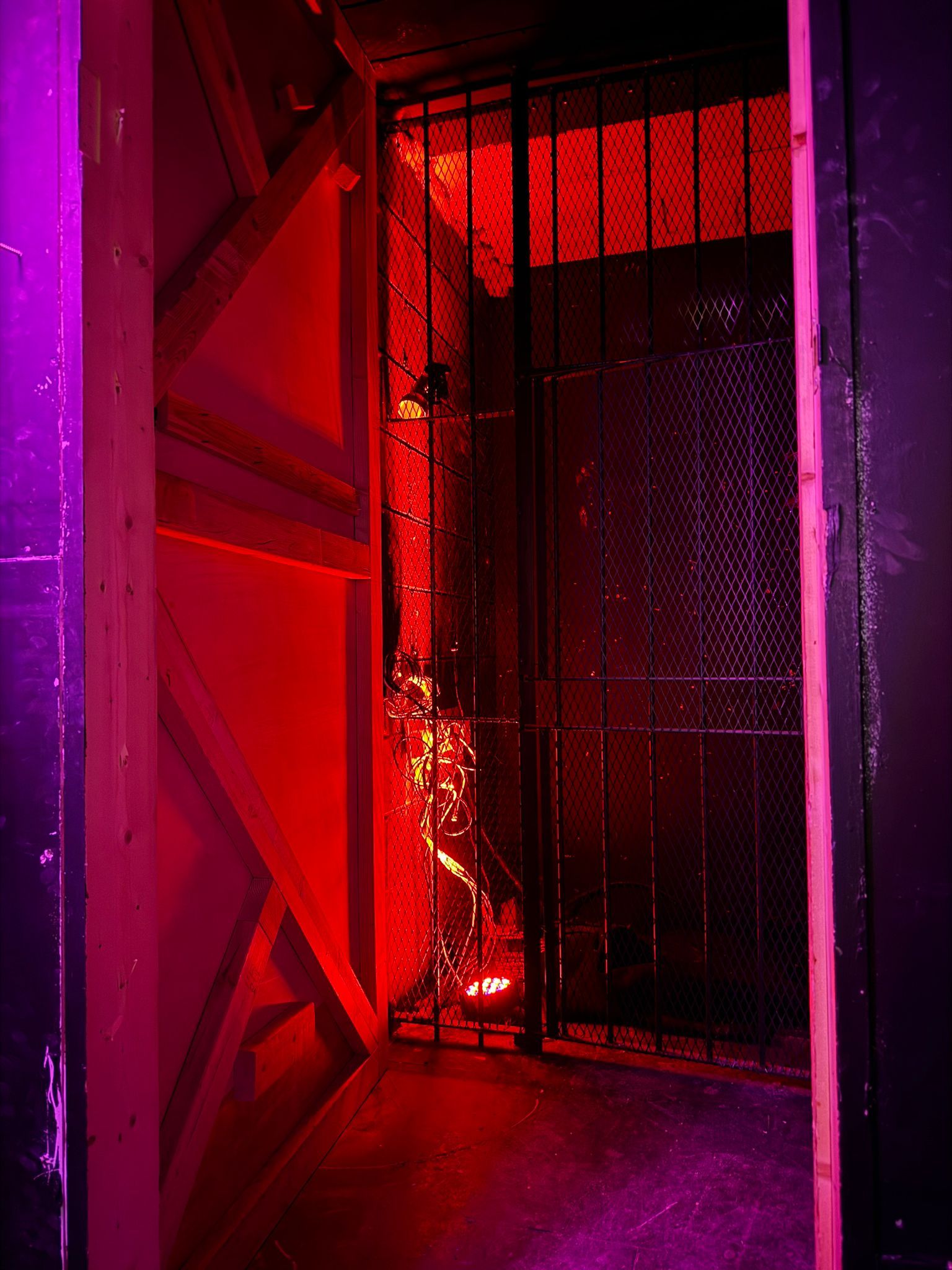
    At @38 in Clapton E5, the visual language is built into the space. Exposed industrial structure, dark finishes and dramatic lighting create a set without asking you to bring one.

    No set build required.

    That means less prep. Less hire. Less time lost before recording starts.

    2. Broadcast-quality audio

    Video gets the click. Audio keeps the viewer.

    Listen for room echo. Ask what microphones and mixer are included. Check whether the recording room is acoustically controlled or simply decorated to look like a studio.

    The dedicated Studio @38 is a separate recording room with controlled acoustics. It is designed for interviews, livestreams, voiceover and media production.

    The room is fully independent from the main floor. No shared lounge noise. No bleed from another booking. Full exclusivity during your session.

    That matters when your guest has travelled across London and you have one chance to get the interview right.

    3. More than one usable space

    A single room works until the format gets bigger.

    You may need one space for the interview, another for guest prep, and a larger floor for a live audience, product reveal or additional content. You might want to record the podcast in the controlled studio, then move to the main floor for photographs and short-form video.

    @38 gives you both options:

    • The dedicated studio room for controlled audio and video recording.
    • The main floor for larger setups, live content, shoots and events.

    The spaces can be booked independently or combined. The main floor holds up to 170 people, so the venue can scale from a two-person interview to a live recording or brand event.

    That flexibility is one reason a creative space in East London can outperform a specialist booth. You are not locked into one format.

    Raw industrial corner with cage structure and red-purple lighting

    4. Lighting you can shape

    A podcast background should not compete with the speakers. It should give the frame depth.

    Look for adjustable lighting rather than one fixed ring light. Coloured washes, practical lights and shadow can help you create different looks across a series without rebuilding the set every time.

    At @38, the dark industrial surfaces take colour well. Magenta, blue, red and amber lighting can shift the mood while keeping the raw structure visible.

    You can shoot a serious interview in one corner, then create a more energetic social clip in another. Same booking. Different frame.

    5. A rate that works for the whole production

    Studio hire is only one line in the budget. You may also need camera operators, editors, transport, catering and guest expenses.

    Transparent rates help.

    Studio @38 starts from £175:

    • Half Day : £175: up to 4 hours.
    • Full Day : £300: up to 8 hours.
    • Both spaces: combined bookings available by enquiry.

    A half-day works for one interview, a podcast episode or a short-form production. A full day gives you time to record multiple guests, change setups and capture stills without rushing.

    For recurring shows, series and block booking discounts are available.

    The point is not to book the cheapest room. It is to book a room that reduces the number of other things you need to hire.

    The @38 case study

    @38 is in Clapton, Hackney, London E5.

    The space was built around the way creators work now. One booking can cover a video podcast, interview, portrait session, livestream or event.

    The dedicated studio gives you controlled acoustics and independent access. The main floor gives you scale and a recognisable industrial setting. The visual identity is already in place.

    You bring the format.

    We provide the space, the setup and the room to make it work.

    Dark industrial staircase with red lighting in the @38 venue

    That is the difference between a room that happens to contain podcast equipment and a creative space designed for production.

    You are not forced into one look. You are not building a set from scratch. You are not sharing the building with another crew halfway through an interview.

    You can record clean audio, capture video, shoot stills and create social clips in the same place.

    How to choose your East London creative space

    Before you confirm a booking, ask:

    1. Can the space handle my full crew?
      Count cameras, tripods, lighting, sound, producers and guests.

    2. Is the audio genuinely controlled?
      A moody room is useful. A room with echo is not.

    3. What is included in the rate?
      Check the microphones, mixer, lighting, furniture and access hours.

    4. Can I create more than one look?
      One background can limit an entire series.

    5. Is there room to load in and reset?
      Production takes space before and after the recording.

    6. Can I book the room exclusively?
      Privacy and concentration affect the result.

    7. What happens if I need more time?
      Confirm the available booking windows before your guests arrive.

    8. Will the space work for the next episode?
      A consistent visual environment helps build a recognisable show.

    The best creative space in East London is not necessarily the biggest. It is the one that removes friction from your production.

    East is where the work is

    The migration from Central London is not just about lower rates.

    It is about the format of modern content.

    Podcasts are filmed. Interviews become clips. Events become broadcasts. Brands need stills and video from the same day. Creators need space that can shift between all of it.

    East London has the architecture, infrastructure and creative network to support that work. @38 puts those practical advantages into one venue in Clapton E5.

    Two spaces. Broadcast-quality setup. Dark industrial surfaces. No set build required.

    From £175.

    Explore Studio @38 or check your booking date. We respond within 24 hours.

    What is your favourite creative spot in East London? Tell us in the comments below. If you want to record at @38, DM us or book through at38.org.

    Dark industrial lounge with neon lighting at @38 in Hackney

  • The Anti-White-Box Manifesto: Concrete, Steel, and Character for Modern Creators

    The Anti-White-Box Manifesto: Concrete, Steel, and Character for Modern Creators

    A white box gives you a blank room.

    That is the point.

    Clean walls. Flat light. No texture. No history. Nothing competing with the work.

    For some productions, that is exactly what you need. Product photography. E-commerce. Clinical campaigns. Controlled compositions where the room should disappear.

    But if your project needs atmosphere, a white box can leave you with a problem: the room contributes nothing. You have to build the mood yourself.

    At @38, we take the opposite approach.

    Concrete stays concrete. Steel stays steel. Brick stays visible. The building is part of the frame.

    This is the anti-white-box position. Not because blank studios have no use. Because modern creators often need more than a neutral container. They need a space with a point of view.

    The white box is not a finished look

    A white studio is often sold as a blank canvas. That sounds flexible, but flexibility comes with production work.

    The walls may be neutral, but your brief probably is not. If you are shooting a fashion campaign, music video, interview series or brand launch, you still need to create a world around the subject.

    That can mean:

    • Temporary walls and flats
    • Scenic painting
    • Printed backdrops
    • Furniture and set dressing
    • Additional lighting
    • More crew
    • More load-in and strike time
    • More materials going to waste

    The room is empty. Your production has to fill it.

    A raw industrial venue starts further down the line. You are not beginning with four blank walls. You are beginning with concrete, exposed brick, metal structures, dark surfaces and architectural lines that already give the image depth.

    That does not remove creative decisions. It gives you better ones to make.

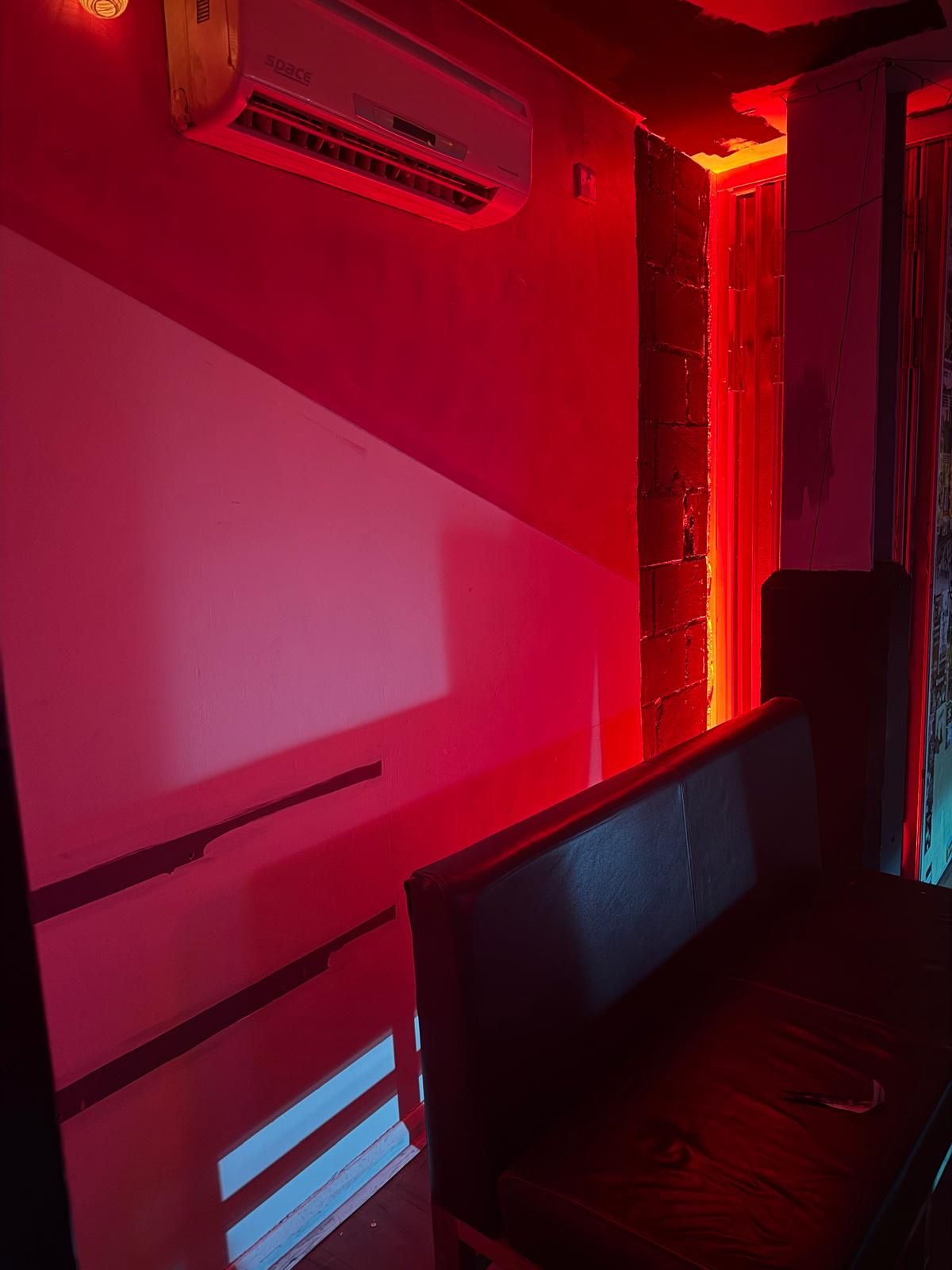
    Red-lit industrial corner at @38 with exposed brick and a black leather bench

    Texture does the work

    Flat walls do not catch light in many interesting ways.

    Brick does. Concrete does. Steel does.

    A rough surface gives a light source somewhere to land. Side light reveals the edges of brickwork. A narrow beam picks up a steel frame. Coloured light falls unevenly across concrete, creating gradients, shadows and tonal shifts without needing a printed backdrop.

    That texture reads on camera. It gives the eye somewhere to move.

    For a photographer, it creates a background with its own structure. For a director, it adds atmosphere to a wide shot. For a brand, it gives the campaign a stronger visual identity than another image against a seamless white wall.

    The key is not to light every surface equally. Let parts of the room disappear. Keep some areas dark. Use contrast.

    At @38, the industrial aesthetic is built around deep shadows and controlled colour: cyan, magenta, violet, red and warm amber against charcoal and midnight tones.

    The result changes with the lighting plan. The architecture remains.

    The building is the set

    This is the practical case for raw industrial spaces.

    No set build required.

    You can arrive with your camera, lights, talent, products and styling. The space already gives you a visual starting point. You might add a chair, a table, a soft textile or a chrome prop. You do not need to construct a complete environment to make the frame feel considered.

    That matters when time is tight.

    If you have booked a half day of shooting, every hour spent assembling a fake wall is an hour you are not shooting. If the production has multiple looks to capture, the difference becomes larger.

    A raw space lets you spend that time on:

    • Camera movement
    • Lighting changes
    • Wardrobe changes
    • Product variations
    • Interview takes
    • Behind-the-scenes content
    • Alternate crops for social

    The architecture gives you a look before the first prop arrives.

    Concrete, steel and brick give you range

    Raw does not mean one-note.

    The same industrial surface can support different treatments depending on how you frame and light it.

    Keep it stripped back

    Use the concrete floor, steel structure and brick walls with minimal styling. This works for music content, streetwear, documentary portraits and direct-to-camera pieces.

    The room stays visible. The subject carries the story.

    Push the contrast

    Bring in sharp coloured light, reflective surfaces and darker wardrobe. Use the steel as graphic framing. Let magenta or cyan pick out the architecture while the rest of the room falls away.

    This works for fashion, music videos and artist content.

    Add softness against the hard surfaces

    Concrete and steel become stronger when paired with something tactile. Velvet. Linen. Leather. Silk. A single soft object can create contrast without turning the room into a set.

    This is useful for product campaigns, editorial work and portraiture. The background stays industrial. The styling gives it a different temperature.

    Use the volume

    Industrial rooms give you more than a wall. They give you distance, height and layers.

    Shoot wide. Frame through a structural element. Move the subject away from the background. Use the foreground to create depth.

    A white box can give you a clean horizon. A raw space can give you a whole composition.

    Dark industrial DJ booth at @38 with Pioneer CDJs, turntables and blue ambient lighting

    Better for content days

    The anti-white-box approach is not only about making one strong image.

    It is also about making more content in one booking.

    @38 offers a raw industrial main floor alongside a dedicated studio room. That gives you two contrasting environments without moving your production across London.

    Record an interview in the controlled studio. Shoot stills against the brick and concrete. Capture a performance beside the steel structure. Film short-form content under coloured light.

    Two looks. One booking.

    For creators and brands working across multiple platforms, this matters. One session can produce a long-form video, short clips, stills, campaign assets and behind-the-scenes material.

    The Content @38 setup is designed around that kind of flexible production. Sessions start from £175, while Shoots @38 start from £600 for a half day of up to four hours on the main floor.

    Check the brief before you book. If you need a specific camera, lighting or audio package, confirm it in advance. But the starting point is already there: a space with two distinct visual environments and no scenic build to manage.

    A stronger fit for modern brands

    A white box says: this image could have been made anywhere.

    That is sometimes useful. It can also make a campaign feel interchangeable.

    Industrial spaces carry a sense of place. They feel connected to the city, to music, to making things, to late-night work and unfinished ideas. That can be useful for brands that want to look current without sanding away every rough edge.

    The environment is especially suited to:

    • Fashion and streetwear
    • Music and artist campaigns
    • Technology and design products
    • Automotive and lifestyle content
    • Interviews and podcasts
    • Brand launches
    • Editorial photography
    • Social-first content

    An industrial event space in London can also carry that identity into a live setting. @38 has a 170-person capacity, a full bar, staffing, security, Pioneer DJ setup and atmospheric lighting. Event packages start from £2,500 for an evening or weekend booking.

    Your launch does not need to look like a conference room with branded panels. The concrete, brick and steel can do more of the visual work before guests arrive.

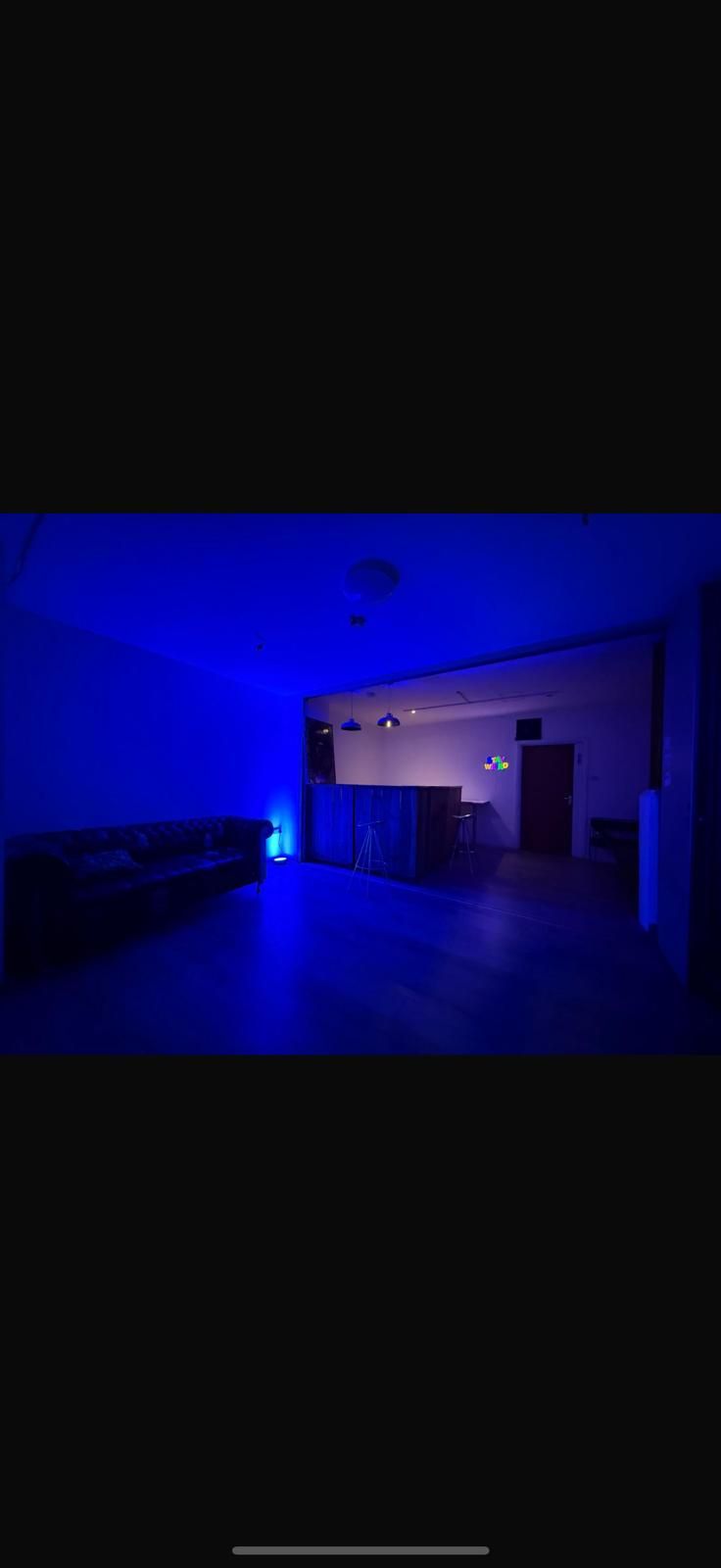
    Wide industrial lounge at @38 in Hackney with blue lighting, dark seating and bar area

    Raw does not mean unplanned

    There is a difference between an industrial space with character and an empty warehouse with no production support.

    The best results still need a plan.

    Scout your angles. Decide which surfaces should stay in frame. Build a lighting palette before the shoot. Keep cable runs clean. Bring props that contrast with the architecture rather than hiding it.

    If you are shooting people, check how the coloured light will affect skin tones. If you are recording audio, confirm the room and equipment requirements. If you are hosting an event, check capacity, timings and what is included.

    Raw architecture gives you a strong starting point. It does not replace preparation.

    That is the balance. The room has character, but your brief still leads.

    For more on working with this kind of location, read the Hackney creative director’s guide to styling a raw industrial space or see the industrial photoshoot mistakes worth avoiding.

    Choose the room that contributes

    A white box is useful when you want the room to disappear.

    Choose a raw industrial space when you want the room to contribute.

    Concrete gives you weight. Steel gives you lines. Brick gives you texture. Controlled lighting turns those materials into different looks without covering them up.

    At @38, the space is built for creators who need more than a white box. Podcast recording, DJ sessions, studio production, shoots, events and content days all happen under one address in Clapton · Hackney · London E5.

    No fake walls. No unnecessary dressing. No starting from zero.

    Team white-box or team raw?

    Comment below and tell us where you stand. Then DM us if you want to view the space in person. We will show you the concrete, steel, brick and the corners that do the work on camera.

    View the space · Book a shoot · We respond within 24 hours.

  • Inside @38: A Full Venue Tour of Our Podcast, DJ, Studio, and Event Spaces

    Inside @38: A Full Venue Tour of Our Podcast, DJ, Studio, and Event Spaces

    One address. Four ways in.

    At @38, you do not have to choose between a recording studio, a DJ room, a content location and an event venue. They are all here, under one roof in Clapton · Hackney · London E5.

    The space is raw by design. Exposed brick. Dark timber. Steel structure. Coloured light. Rooms that already have a point of view, so you can spend less time building a set and more time making the thing.

    Take a walk through.

    Start with the podcast room

    Podcast recording room at @38 with two black Wassily chairs, broadcast microphones and blue-red studio lighting

    Record here. Sound like this.

    The podcast room is a dedicated studio built for conversations that need to look as good as they sound.

    Two Wassily chairs sit beneath the industrial A-frame structure. Twin boom-arm broadcast microphones are ready at the table. Purple and red studio lighting give the room its visual identity without turning the set into a distraction.

    This is not a ring light in front of a grey curtain. The background is part of the frame.

    Use the room for:

    • Long-form interviews
    • Solo podcasts
    • Panel recordings
    • Video podcasts
    • Short-form clips
    • Guest conversations
    • Series production

    The room has controlled acoustics, so you are not fighting echo or bleed in the edit. It is also independent of the main floor, which means your recording stays private during the session.

    You can book the podcast room for up to 4 hours from £175, or take the full day for up to 8 hours from £300. Full exclusivity is included during your booking.

    If you are producing a series, ask about recurring slots and multi-session rates. One room. One look. A more consistent show across every episode.

    Explore Podcast @38

    Move through to the DJ booth

    Professional Pioneer CDJ and turntable setup at @38 in a blue-lit industrial DJ booth

    Your setup. Our stage.

    The DJ area sits on the main floor, with the equipment already in place.

    You get a professional Pioneer setup, turntables, a mixer, full PA and monitor system. The lighting rig adds red, purple, teal and blue washes across the room, giving you a finished visual environment for a recorded set, livestream or rehearsal.

    No extra backline hire. No last-minute search for a compatible mixer. Bring your USBs, records or performers and get into the session.

    The setup includes:

    • Pioneer CDJ multi-player decks
    • Turntables for vinyl sets
    • Professional DJ mixer
    • Full PA and monitor system
    • Atmospheric lighting rig
    • Viewing window from the adjacent room
    • Exclusive use of the main floor

    The viewing window is useful if you are filming from another room or running a livestream with a separate camera position. It gives you another angle without putting the camera directly in the booth.

    The main floor has a 170-person capacity, but it works just as well for a focused recording session with a small crew.

    DJ sessions start from £600 for up to 4 hours. A full-day booking is up to 8 hours from £1,100. You can record multiple sets, rehearse before a show, or build a full livestream day around the room.

    Book the DJ Setup

    The dedicated studio room

    Atmospheric studio lounge at @38 with a dark Chesterfield sofa and purple lighting

    Clean sound. Controlled space.

    The dedicated studio is separate from the main floor. That matters when you are recording an interview while another team is loading equipment, or filming a corporate piece while an event setup is happening elsewhere in the building.

    The room is self-contained, with controlled acoustics and independent access. It is built for audio and video production where the technical side needs to stay quiet and predictable.

    Use it for:

    • Interviews
    • Livestreams
    • Corporate video
    • Voiceover
    • Media production
    • Short-form content
    • Branded conversations

    The room is dressable, too. Bring your own set elements if the project needs a specific brand treatment. Or keep the setup stripped back and let the lighting and structure do the work.

    For a small production team, the studio gives you a controlled environment without the footprint of a large soundstage. For a larger shoot, you can use the main floor for the visual sections and move into the studio for clean interviews, voiceover or presenter work.

    Studio hire starts from £175 for up to 4 hours. Full-day access is up to 8 hours from £300.

    You can also combine both spaces for a larger production. Record in the studio. Shoot the wider visuals on the main floor. Keep everything in one location.

    See Studio @38

    Then open out onto the event floor

    Raw industrial event area at @38 with dark surfaces, exposed structure, lounge seating and blue ambient lighting

    Your night. All in.

    The main floor is where the different parts of @38 come together.

    It can be a club night, a brand launch, a private party, a listening event, a screening or a live recording with an audience. The room is flexible without feeling neutral. You are working with a space that already has texture, contrast and atmosphere.

    The event package includes:

    • 170-person capacity
    • Full bar operation
    • Venue staffing
    • Door and in-venue security
    • Pioneer CDJ setup
    • Turntables and professional mixer
    • Full atmospheric lighting rig
    • Full exclusivity
    • Evening and weekend availability

    That means fewer suppliers to coordinate and fewer details to chase across separate venues. Bring your crowd, your DJs and your running order. The bar, staffing, security and core DJ setup are already covered.

    Event hire starts from £2,500 for an evening or weekend booking. Custom packages are available for branded events, recurring nights, multi-day productions and specific staging or hospitality requirements.

    The space can also work as a content backdrop before the doors open. Shoot the campaign. Record the interviews. Host the launch. Keep the production in the same building.

    Check Events @38

    What the space looks like on camera

    Red-lit industrial corner at @38 with exposed brick, black seating and dramatic coloured light

    The room does not need much added to it.

    Raw brick walls. Dark wood floors. Industrial details. Coloured light that can shift from deep blue to red, purple or teal. These surfaces give a shoot depth before you bring in a single prop.

    That is the point of the space.

    You can shoot fashion, portrait, product, editorial and music content without covering every wall or building a temporary environment. Use the DJ booth as a backdrop. Move talent into the studio room for a change of look. Use the darker corners for close-ups and the open main floor for wider frames.

    The lighting rig is already part of the architecture. Track lighting gives you room to add your own kit. Power runs throughout the space. The studio room can be used for talent holding or changing, and parking for equipment vans is available by arrangement.

    Shoot hire starts from £600 for up to 4 hours. Full-day access is up to 8 hours from £1,100.

    Book a Shoot Day

    One booking. More than one format.

    The most useful thing about @38 is not any single room. It is the distance between them.

    You can start with a podcast recording in the studio room, move to the main floor for campaign stills, then finish with a DJ livestream. Or film a brand interview in the controlled studio before opening the doors for an evening launch.

    For content teams, that means more output from one booking. Different backgrounds. Different lighting. Different formats. No van ride across London between setups.

    The Content @38 option is built around that flexibility, with the studio room and main floor available for different visual environments in the same production day.

    Which space would you use first?

    If you are looking for a creative space in East London or a recording studio in Hackney, @38 gives you room to start with the format and build from there.

    Record a conversation. Rehearse a set. Film the campaign. Host the night.

    We are in Clapton E5, with availability from 08:00 Monday to Sunday for studio, podcast, DJ and shoot bookings. Events run in the evenings and at weekends. We respond within 24 hours.

    Which space would you use first : the podcast room, DJ booth, dedicated studio or event floor? Comment below and tell us what you would make. Then DM @38 to arrange a viewing of the space.

    Explore @38

  • 72% of UK Podcast Listeners Watch Video Now ,  Is Your Podcast Studio Hire London-Ready?

    72% of UK Podcast Listeners Watch Video Now , Is Your Podcast Studio Hire London-Ready?

    72% of UK weekly podcast listeners now watch video podcasts. YouTube has overtaken Spotify as the UK’s most-used podcast platform, with 29% choosing YouTube compared with 28% for Spotify.

    That changes the job.

    You are not only recording clean audio anymore. You are creating something people can watch, clip, share and recognise in a feed.

    A bedroom setup might get the conversation started. It may not give you the sound, lighting or visual consistency needed for a serious video podcast.

    That is where the right podcast studio hire in London makes a difference.

    The numbers have moved

    The latest UK Podcast Consumer 2026 research from Edison Research at SSRS shows a clear shift in how people consume podcasts.

    • 72% of UK weekly podcast consumers actively watch video podcasts.
    • That figure was 58% in 2023.
    • 29% use YouTube most to consume podcasts.
    • 28% use Spotify most.
    • 87% still listen to audio-only podcasts.

    The last point matters. Audio is not disappearing. Video is joining it.

    Your podcast now has to work in both places. It needs to sound right through headphones and look right on YouTube, TikTok, Instagram and LinkedIn.

    You do not need a huge production crew to get there. You do need a setup that has been designed for the format.

    A podcast is now a visual product

    The camera is no longer an optional extra placed on a tripod at the edge of the room.

    The visual frame is part of the show.

    Your guests notice the background. Viewers notice the light. Editors need clean footage for clips. Brands want consistency across episodes. Listeners may discover you through a 45-second video before they ever hear the full conversation.

    A strong video podcast setup gives you:

    • A recognisable visual identity.
    • Clean, consistent lighting.
    • A frame that does not look improvised.
    • Audio that does not need rescuing in post.
    • Enough room to record long-form conversations without constantly resetting the space.

    That last one is easy to overlook. If your guest is shifting away from the microphone, the room is echoing, or the background is full of household clutter, every episode becomes harder to produce.

    The conversation is only one part of the recording.

    The room is doing work too.

    Two Wassily chairs arranged for a podcast recording in a dark industrial studio

    Why bedroom podcast setups start to show their limits

    There is nothing wrong with starting at home.

    A bedroom setup is cheap. It is close by. You can record whenever the room is quiet.

    But the compromises build quickly.

    1. The room affects the sound

    Hard walls, bare floors and high ceilings create reflections. Soft furnishings help, but a bedroom is rarely arranged around controlled recording.

    You may hear:

    • Echo around speech.
    • Background noise from traffic or neighbours.
    • Computer fans and air conditioning.
    • Uneven sound between two speakers.
    • Mic bleed when multiple people are recording.

    You can fix some of this in editing. You cannot remove every room problem cleanly.

    A controlled acoustic environment gives you a better starting point. It also makes the session easier for everyone in the room.

    2. The light changes throughout the session

    Natural light looks good until it moves.

    A podcast recording can run for two, four or eight hours. The window changes. Clouds move across the sky. Skin tones shift. One side of the room becomes brighter than the other.

    Then you have to match the footage in post.

    A controlled studio lighting setup keeps the frame consistent from the opening question to the final sign-off. It also gives the show an atmosphere that can be repeated across every episode.

    3. The background becomes part of the problem

    A bedroom background says bedroom.

    That may be right for your show. It may not be right for a business podcast, interview series, product launch or branded content campaign.

    You can build a set at home, but that takes time, storage and money. Then you have to take it down again.

    At @38, the space already has its own point of view. Raw industrial surfaces. Dark structure. Purple-to-red lighting. Wassily chairs. No set build required.

    4. The setup takes longer than the recording

    When the recording space is improvised, the first part of the day disappears into troubleshooting.

    Move the desk. Test the mic. Find the cable. Adjust the lamp. Clear the background. Check the camera. Start again.

    That is not production. That is preparation for production.

    A dedicated podcast studio lets you spend the session on the episode.

    What “broadcast-ready” should mean

    “Broadcast-quality” should not be a vague label.

    You should be able to identify what is actually included.

    At Podcast @38, the dedicated studio room includes:

    • Twin broadcast-quality boom-arm microphones.
    • A professional audio interface.
    • Controlled acoustics to reduce echo and bleed.
    • Two Wassily chairs for a consistent interview frame.
    • Adjustable purple and red studio lighting.
    • A private room independent of the main floor.
    • Full exclusivity during your session.
    • Access from 08:00, Monday to Sunday.

    The setup works for long-form interviews, solo shows, panel recordings, livestreams and branded media.

    It is already framed for video. You are not walking into an empty room and asking how to make it look good.

    Moody lounge area with purple and red lighting inside the @38 industrial venue

    Podcast studio hire London: what to check before you book

    Not every studio hire offers the same thing.

    Before you confirm a date, ask five direct questions.

    Is the room actually built for podcasts?

    A room with a table and two microphones is not automatically a podcast studio.

    Check the microphone type, interface, acoustic treatment and seating. Find out whether the room is dedicated or shared with other activity.

    Can the lighting support video?

    Ask whether the lighting is fixed, adjustable or simply whatever is already on the ceiling.

    You want a setup that gives you a repeatable look. You also want enough control to separate different formats: a serious interview, a music conversation or a more branded visual treatment.

    Does the background need a set build?

    A blank room gives you flexibility. It also gives you another job.

    If the background already has texture, depth and shape, you can get recording quickly. That matters when you have guests travelling across London or a production team working to a tight schedule.

    Is the room private?

    Privacy affects the recording.

    You do not want another booking cutting through the background, loud activity bleeding into the microphones or people walking through the shot.

    At @38, the podcast room is independent of the main floor. Sessions are fully private and exclusive.

    Is the price clear?

    You should know what you are paying for before you enquire.

    At @38:

    • Half day: £175 , up to 4 hours
    • Full day: £300 , up to 8 hours
    • Series bookings: discounted rates available on request

    You can book the podcast studio for a half-day or full-day session. A half day works for one episode, a solo recording sprint or several short-form clips. A full day gives you room to record multiple episodes or a complete series.

    The practical upgrade from home to studio

    You do not need to change your format when you move into a studio.

    Bring the same questions. Keep the same host. Invite the same guests.

    Change the conditions around the conversation.

    Start with a simple run sheet:

    1. Arrive 20–30 minutes before recording.
    2. Check the seating and camera frame.
    3. Set your microphone distance.
    4. Record a short test.
    5. Confirm the lighting look.
    6. Record the episode.
    7. Capture an intro, outro and a few short clips while everyone is already in place.

    The mistake is treating video as something you can add later.

    Plan the clips before the session. Leave small gaps between topics. Repeat a strong answer if the wording is useful. Give your editor clean moments to work with.

    You do not need to make the conversation unnatural. You just need to leave space for the content to travel.

    Podcast chairs and industrial A-frame structure under moody blue and red lighting

    Why YouTube changes the brief

    YouTube winning the UK platform race is not only a distribution detail.

    It changes how podcast creators think about the recording itself.

    A listener may find your show through:

    • A full-length YouTube episode.
    • A vertical clip.
    • A search result.
    • A guest’s social post.
    • A recommended video on a smart TV.
    • A branded channel with several episodes in the same visual format.

    The Edison research also found that smart TV podcast consumption has grown. People are not only listening through phones and laptops. They are watching podcasts in larger, more passive viewing environments.

    That makes the frame matter.

    You do not need a television set. You need a room that holds up when someone watches for an hour.

    A serious setup without the white-box look

    There is a reason many creators are looking beyond generic studios.

    A white wall, two stools and a ring light can be functional. It can also look like everyone else.

    @38 takes a different approach.

    The podcast room sits inside a raw industrial creative space in Clapton E5. The structure and lighting are already part of the environment. The look is dark, controlled and easy to recognise.

    No fake brick wallpaper. No unnecessary set dressing. No building a scene from scratch before every recording.

    Just a dedicated room, broadcast-ready equipment and a visual background with some weight to it.

    If your current setup is a bedroom, spare room or corner of the office, that is the point of comparison. Not perfection at home. A cleaner recording process, stronger image and more usable content.

    Ready to move your podcast out of the bedroom?

    Book a half day and test the difference.

    Podcast @38 · Clapton E5
    From £175 · up to 4 hours
    Full-day sessions: £300 · up to 8 hours
    We respond within 24 hours.

    Book the Podcast Studio or visit at38.org to see the full space and services.

    What does your current setup look like? A bedroom desk, a home office, a rented room or a full studio?

    Comment below and tell us what you are recording, what is working and what is getting in the way. Then DM @38 or book your session at at38.org.

  • Raw Industrial Textures: Why Fashion and Music Brands Are Ditching White Studios

    Raw Industrial Textures: Why Fashion and Music Brands Are Ditching White Studios

    A white studio gives you control. It also gives you the same image everyone else can make.

    Fashion and music brands are moving towards spaces with more weight: exposed brick, steel structures, concrete floors, deep shadows and lighting that already has a point of view. Not because white studios are useless. They still work for clean e-commerce, pack shots and repeatable catalogue images.

    But campaigns need more than consistency.

    They need a setting that says something before the model, product or artist enters the frame.

    That is why raw industrial spaces are becoming the first choice for editorials, music videos, brand films and campaign content across East London.

    At @38, the space is built around that shift. A raw industrial creative venue in Clapton E5, with dramatic coloured lighting, exposed surfaces and no set build required.

    The white box has done its job

    White studios are useful when the background needs to disappear.

    They give photographers a neutral surface. They make colour correction straightforward. They keep attention on the garment or product. For high-volume product photography, that control matters.

    The problem comes when every image starts to look interchangeable.

    A white wall does not bring history, tension or atmosphere. Your creative team has to supply all of it through lighting, styling, props and set construction. That can work. It can also add hours to the production schedule and another line to the budget.

    For a campaign with a stronger visual direction, the room should already be doing some of the work.

    A raw industrial location gives you that starting point.

    Texture gives the camera something to hold

    Exposed brick is not just a backdrop. Steel is not just structure. Concrete is not just flooring.

    These surfaces catch light differently. Brick breaks up a wash of colour. Steel creates sharp lines and reflections. Concrete absorbs light and gives darker frames more depth.

    The result is an image with layers.

    A model in a white studio might need a constructed wall, a painted floor and several props to create context. In an industrial space, the architecture can provide those details immediately. The frame feels lived-in without looking over-designed.

    This is one reason an industrial photoshoot location in London works well for fashion and music campaigns. The setting brings its own visual language.

    Hard materials against soft fabrics. Glossy products against weathered surfaces. Clean silhouettes against rough walls.

    The contrast is built in.

    Raw metal cage partition with red and purple atmospheric lighting at @38

    Why fashion brands are choosing industrial locations

    Fashion imagery needs to show the clothes clearly. It also needs to create a world around them.

    Raw spaces give stylists more options without requiring a full set build. A long coat can move against a concrete wall. Technical fabrics can sit against steel. Jewellery can pick up coloured highlights from a dark background. A minimal silhouette can hold the frame because the architecture gives it scale.

    You can keep the styling stripped back and let the materials carry the image. Or you can create a sharper contrast with silk, colour, chrome, reflective surfaces or saturated wardrobe.

    The space does not dictate one look.

    It gives you room to build several.

    That matters when a shoot needs campaign stills, social cutdowns, behind-the-scenes content and moving image from the same booking. You can change the wardrobe, lighting direction and camera position without changing location.

    At @38, the main floor is designed for that kind of flexibility. Use the industrial surfaces as they are. Add your own props. Change the colour palette. Keep the frame dark and controlled, or push the lighting harder.

    No fake walls. No waiting for a set to dry. No four-hour build before the first shot.

    Music visuals need atmosphere

    Music brands and artists have a different problem from product teams.

    The image needs to feel like the sound.

    A clinical white studio can be useful for a performance video or press shoot, but it often needs heavy lighting, projection or set dressing to create mood. An industrial space starts closer to the finish line.

    Deep shadows suit darker production. Steel and concrete give electronic, hip-hop, rock and alternative visuals a physical edge. Coloured light can divide the frame into zones without adding walls or scenery.

    You can shoot a full performance on the main floor, move into a tighter corner for portraits, then capture detail shots around the structure and surfaces. One booking. Several visual environments.

    That is the practical advantage of a venue with character.

    The backdrop is not only something behind the subject. It becomes part of the visual identity.

    Red-lit industrial metal staircase at @38, captured from a low angle

    Dramatic lighting without overbuilding the scene

    Raw architecture needs intentional lighting.

    Flood the whole room and the texture disappears. Light the subject and let the background fall away, and the space gains depth.

    At @38, the dark industrial aesthetic works with low-key lighting, coloured accents and strong contrast. Magenta, red, blue, cyan and amber tones can pick up different surfaces across the room. A steel edge catches a highlight. Brick holds a warmer glow. Concrete recedes into shadow.

    This gives you a more controlled kind of drama.

    Not random darkness. Not a room that is simply underlit.

    A considered lighting plan can create two completely different looks in the same space:

    • A cold blue setup for a performance or streetwear campaign.
    • A red and amber setup for portraits, artwork or a night-time brand film.
    • A narrow spotlight for product detail.
    • A broad wash for group movement and wider compositions.

    You can also bring your own lighting team and work with the room’s existing character. The important part is that you are starting with an environment that already has depth.

    No set build means more time for the work

    Set builds are not automatically bad. Sometimes the concept needs one.

    But if the goal is texture, scale and atmosphere, building a fake industrial wall inside a studio is the long way around.

    You pay for materials. You pay for labour. You lose setup time. Then you still need to light the set so it looks convincing.

    A raw venue removes that step.

    At @38, the exposed brick, steel, concrete and industrial architecture are already part of the space. You can arrive with your camera kit, styling, lights and crew, then start shaping the frame.

    The venue’s own industrial shoot guide covers the practical side: use raking light to bring out surface detail, keep the shadows, and work with the architecture instead of hiding it.

    The building is the set.

    Use it.

    One booking. More than one visual world

    A strong content day rarely produces one type of asset.

    You may need:

    • Hero campaign stills.
    • Short-form video.
    • Artist portraits.
    • Product details.
    • Press images.
    • Behind-the-scenes footage.
    • Interview or social content.

    Moving between locations for each look costs time. It can also make the campaign feel disconnected.

    A flexible creative venue lets you keep the same production team, styling and kit while changing the visual treatment. Shoot on the main floor, use a darker corner for close-ups, then move into a more controlled area for interviews or media content.

    @38 also offers content creation bookings that can combine the raw industrial main floor with the studio room. Two different environments in one booking.

    For a photographer or creative director, that means less resetting and more usable output.

    For a brand, it means more content from the same production budget.

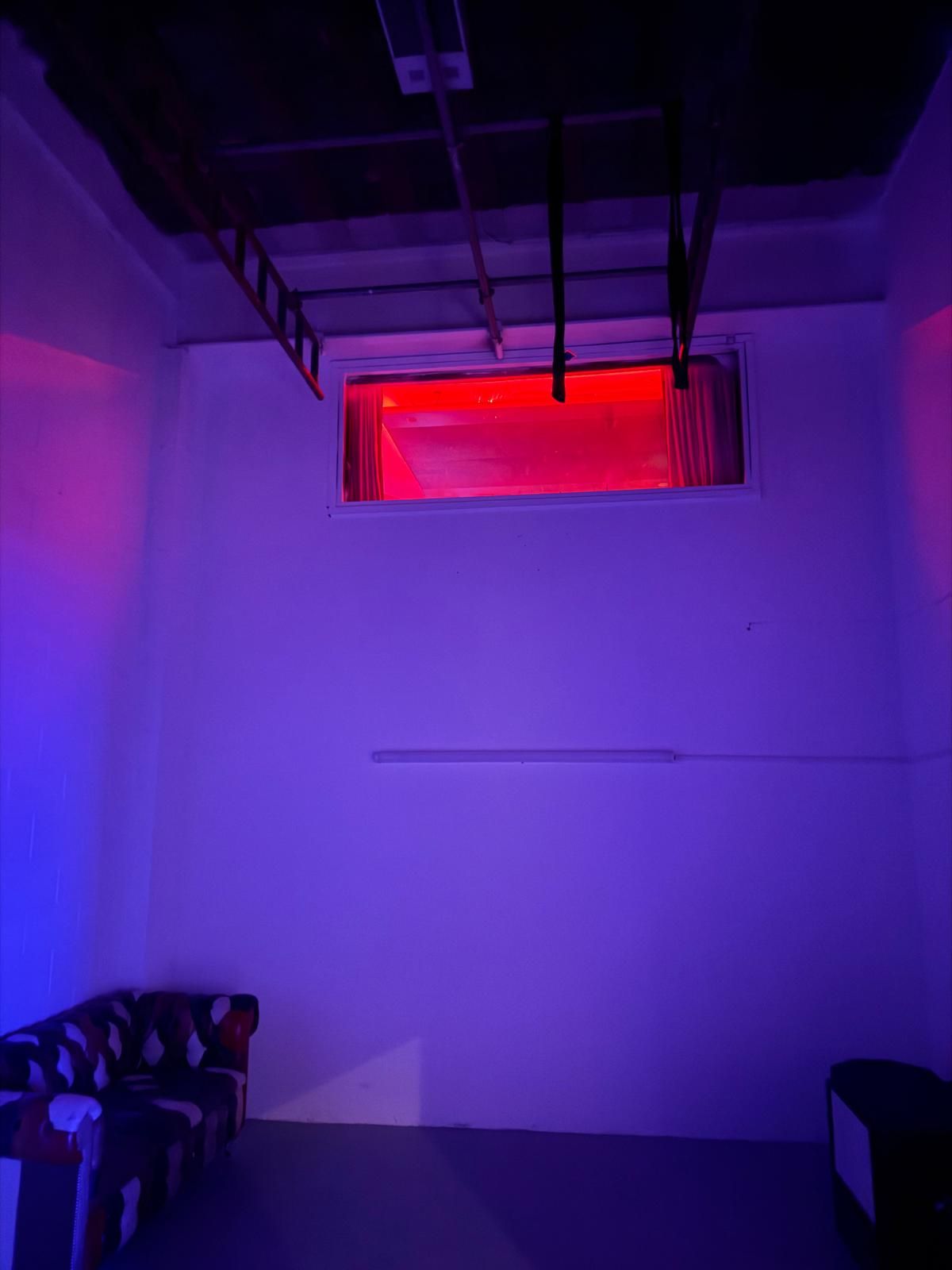
    Dark studio lounge with purple lighting and industrial ceiling details at @38

    What to consider before booking a raw industrial space

    Raw does not mean unplanned.

    Before you book, check:

    1. How the light behaves

    Ask where the existing light comes from and whether you can control it. Decide whether you want to work with the ambient colour or replace it with your own lighting plan.

    2. How many looks you can realistically shoot

    Build a schedule around the zones already available. Avoid planning five major resets in a four-hour booking.

    3. What the surfaces do on camera

    Concrete, brick and metal can look completely different depending on lens choice, angle and light direction. Review the space properly before the shoot.

    4. Whether the booking is exclusive

    Shared spaces create interruptions. Full exclusivity gives your crew the room to work without other bookings moving through the frame.

    5. What you actually need to bring

    If the venue already provides the visual character, bring fewer construction materials and put the budget into styling, lighting and crew.

    For more guidance, The Location Guys explain why warehouses work so well on camera: scale, texture and built-in character give campaigns more to work with before production begins.

    Book the raw look in Hackney

    If you are looking for a photography studio in Hackney with more character than a white box, @38 gives you a ready-made industrial environment for fashion, portrait, product, editorial and music content.

    Shoots @38

    • Clapton E5 · Hackney · London
    • Exposed brick, steel and concrete surfaces
    • Dramatic coloured lighting
    • Main floor for photo and video production
    • No set build required
    • Full exclusivity
    • From £600 for a half day

    Book a shoot or check the space.

    We respond within 24 hours.

    The white studio is not dead. It is just not the only option.

    Use a white studio when you need a neutral background.

    Use an industrial space when you need the background to carry weight.

    Fashion and music brands are switching because audiences can feel the difference. Raw materials add texture. Dramatic light adds mood. A real space gives the campaign somewhere to exist.

    And when the architecture is already doing the heavy lifting, there is no reason to build a fake version of it.

    Why are you moving away from white studios? Comment below and tell us what you want more of in your next shoot : texture, scale, atmosphere or something else. Then DM @38 to check your date in Clapton E5.

  • Content Creation Days: How to Shoot Video, Audio, and Stills in One Booking

    Content Creation Days: How to Shoot Video, Audio, and Stills in One Booking

    One idea rarely stays one piece of content.

    A podcast episode becomes short clips. A DJ set becomes a livestream, stills, and a cover image. A brand interview needs a hero film, vertical edits, behind-the-scenes footage, and portraits of everyone involved.

    Booking a different space for every format slows the whole thing down.

    You lose time moving equipment. You lose consistency between locations. You pay for multiple setups when one well-planned session could cover the lot.

    That is the point of a content creation day.

    At @38, you can move between the raw industrial main floor and the dedicated studio room in one booking. Shoot video, record clean audio, capture stills, and leave with a library of material built around one visual identity.

    One booking. Multiple looks. No white box.

    What is a content creation day?

    A content creation day is a focused studio booking built around batch production.

    Instead of arriving with one video to shoot, you plan several outputs in advance:

    • Long-form video
    • Short-form vertical clips
    • Podcast episodes
    • Interviews
    • Voiceovers
    • DJ or music content
    • Portraits and editorial stills
    • Product or campaign images
    • Behind-the-scenes footage
    • Social thumbnails and cover images

    You are not trying to make everything at once. You are using the same crew, talent, styling, equipment, and location to capture several formats in a controlled run.

    That is the difference between a busy shoot and a productive one.

    At @38, Content @38 starts from £175 for a half day of up to 4 hours, with both the main floor and studio room available. The space is in Clapton E5, with access from 08:00, Monday to Sunday.

    Check the space and available sessions.

    Start with the highest-value content

    Do not begin the day with filler shots.

    Start with the content that needs the most energy, concentration, or collaboration. This might be a filmed interview, a full podcast episode, a product campaign, or a live DJ recording.

    Get the important material while everyone is fresh.

    The main floor gives you the larger visual environment. Use the industrial surfaces, coloured lighting, steel structure, and open space to create movement and scale. It works for brand films, fashion content, music-led visuals, DJ footage, and social clips that need more character than a plain backdrop.

    Professional Pioneer DJ setup in a dark industrial Hackney studio

    The DJ setup includes Pioneer CDJ multi-player decks, turntables, a professional mixer, full PA, and monitor system. If your content needs a performance element, the setup is already in the room.

    No extra set build. No waiting for a blank studio to become useful.

    You bring the concept. The space gives it a starting point.

    Build two or three visual worlds

    Batching does not mean every piece needs to look identical.

    It means the content feels connected while giving your audience enough variation to keep watching.

    At @38, you can create different looks without leaving the building.

    Look one: raw industrial

    Use the main floor for high-impact video, movement, performance, and wide shots.

    This is the place for:

    • DJ sets
    • Music performance
    • Fashion movement
    • Brand films
    • Product demonstrations
    • Group interviews
    • Behind-the-scenes footage
    • Large-format social content

    The dark surfaces and coloured lighting create depth in camera. You can shoot against the architecture, through the lighting, or close into the details.

    You do not need to cover every wall with branding. Let the room do some of the work.

    Look two: dedicated studio

    Move into the studio room for interviews, podcast episodes, livestreams, and more controlled pieces to camera.

    The room has controlled acoustics, twin broadcast-quality boom microphones, two Wassily chairs, and adjustable purple and red studio lighting. It is independent of the main floor, so you can change the pace and feel of the session without rebuilding the set.

    Podcast studio setup with Wassily chairs and purple-red lighting

    This setup works well when the content depends on conversation. The audio stays central. The background has enough detail to feel considered, without pulling attention away from the speaker.

    Use it for the serious interview. The long-form conversation. The solo recording sprint. The livestream that needs to sound clean and look consistent.

    For more detail on the room and rates, visit Podcast @38.

    Look three: details and stills

    Save part of the session for stills and close-up footage.

    You do not need a separate photo studio to capture useful supporting material. Shoot portraits in the chairs. Capture product details against industrial surfaces. Use the coloured light for campaign images, social covers, or press photography.

    Industrial metal cage partition with red and purple atmospheric lighting

    Shoot the details your editor will need later:

    • Hands on the mixer
    • Microphone close-ups
    • Shoes on the concrete floor
    • Cables, controls, and textures
    • Talent moving through the space
    • Product details under coloured light
    • Crew working between setups

    These images help fill a content calendar. They also give your editor options when a video needs a cutaway or a campaign needs a new thumbnail.

    A simple four-hour content day plan

    A half-day booking gives you up to 4 hours. The exact schedule depends on your crew, talent, equipment, and deliverables, but this is a useful starting point.

    00:00–00:20 : Arrive and set up

    Bring your shot list, scripts, styling, and file plan with you.

    Do not spend the first 30 minutes deciding what to shoot. Confirm camera positions, check audio, test the lighting, and get everyone into place.

    If you are working with a team, assign roles before the day. Someone should own the shot list. Someone should monitor audio. Someone should track which takes are usable.

    00:20–01:50 : Shoot the main video

    Capture the most important video first.

    Record the hero interview, performance, brand message, or long-form piece. Then move into the supporting material while the setup is still active.

    If you are filming social content, record several hooks and endings. Do not make every clip from scratch. Change the opening line, angle, or delivery while the subject is already in position.

    01:50–02:40 : Move into the studio room

    Change the visual language.

    Record the podcast, interview, voiceover, or livestream segment in the dedicated studio. If the conversation is long, record the full episode first. Capture shorter introductions, sponsor reads, and vertical cutdowns afterwards.

    Keep cameras rolling where possible. A single conversation can produce a full episode, short clips, still frames, and behind-the-scenes material.

    See the podcast setup at @38.

    02:40–03:40 : Capture stills and B-roll

    Now collect the material that makes the main content easier to publish.

    Shoot portraits, product frames, room details, vertical footage, wide shots, and crew content. Change the lens, position, or lighting treatment before changing the entire setup.

    This is where a video production studio London creators can use for multiple formats becomes useful. You are not only filming one finished asset. You are building the raw material for a month of publishing.

    03:40–04:00 : Review and back up

    Check the key takes before you leave.

    Confirm that the main interview recorded correctly. Check the podcast audio. Review your stills and make sure the essential shots are there. Back up the files before the day is over.

    A content day is only productive if the footage survives the handover.

    Plan the outputs before you book

    The booking is the easy part. The useful work happens before it.

    Write down what you want to leave with. For example:

    • One 30-minute filmed interview
    • Six vertical clips
    • One podcast episode
    • Ten portrait and detail stills
    • A set of behind-the-scenes images
    • Three thumbnail options
    • One short brand introduction

    Then work backwards.

    Which format needs the main floor? Which needs controlled audio? Which talent needs to be present? What can be captured while the lights and cameras are already set?

    If you arrive with one vague idea, you will probably leave with one vague video.

    If you arrive with a clear list, the same four hours can give you a complete content batch.

    Why use a creative space in East London?

    Location affects the work.

    A plain room can be practical, but it often needs styling, set dressing, backdrops, and extra lighting before it looks like anything. That costs time and crew budget.

    A raw industrial creative space East London creators can use gives you a different starting point. The surfaces already have texture. The lighting already has atmosphere. The main floor already supports performance, movement, and larger setups.

    At @38, the podcast, DJ, studio, shoot, event, and content uses sit under one address.

    You can record clean audio in the studio room, then move to the main floor for performance footage or stills. The visual identity stays connected, but the content does not feel repetitive.

    That is the advantage of batching in a space with more than one look.

    Book your content day at @38

    Content @38 is available from £175 for a half day of up to 4 hours. Both spaces are available, with the raw industrial main floor and dedicated studio room ready for different parts of your production.

    Clapton · Hackney · London E5

    Bring your camera team, your talent, your shot list, or just the idea you want to build out. We respond within 24 hours.

    Check your date or DM us with what you are making.

    And tell us in the comments: what would you batch-produce first : video, audio, stills, or all three?

  • How to Host a 170-Person Event in East London Without the Stress

    How to Host a 170-Person Event in East London Without the Stress

    A 170-person event sounds large until you break it into the parts that actually matter.

    The venue.
    The bar.
    The door.
    The sound.
    The lighting.
    The staff.
    The plan for when 170 people arrive at once.

    Get those right and the night runs cleanly. Get them wrong and you spend the whole event solving problems from behind the bar.

    If you’re looking for a warehouse event space in London or an industrial event space in London, start with the venue package rather than the room alone. A cheap dry-hire space can become expensive once you add security, bar staff, equipment, lighting, cleaning and production.

    At @38 Events, the full-venue package starts from £2,500. It includes a 170-person capacity across two spaces, full bar operation, staffing, security, a Pioneer DJ setup, atmospheric lighting and complete exclusivity.

    One price. One contact. One less headache.

    1. Choose the right capacity, not just the right postcode

    A venue’s maximum capacity is only useful if the layout works for your event.

    You need to know:

    • Is the capacity standing, seated or mixed?
    • Where does the bar sit?
    • Can guests move between the spaces?
    • Is there room for a DJ, stage, presentation or dancefloor?
    • Are the toilets, exits and entry points practical for 170 people?
    • Does the venue offer full exclusivity?

    A 170-person event needs enough space for movement. If every metre is filled with furniture, guests queue at the bar, and the DJ is pushed into a corner, the room will feel smaller than the number suggests.

    At @38, the 170-person capacity runs across two unique spaces. That gives you options. Use one area for the main event and another for the bar, seating, networking, performers or a quieter corner.

    The point is not to fill every available surface. The point is to give the night a natural flow.

    2. Pick a venue with character already built in

    A raw venue can save you more than money. It saves time.

    White-box spaces give you four blank walls and a long list of suppliers. You still need to build the atmosphere. You still need to bring in lighting, surfaces, furniture and visual identity.

    An industrial venue gives you a starting point.

    At @38, the architecture, dark surfaces and coloured lighting do the first part of the work. The space already has a visual language. You can add your branding, screens, furniture or production around it without covering every wall.

    No set build required.

    That matters for brand launches, private parties, club nights, listening events and creative industry gatherings. Your guests arrive somewhere with a point of view. Your event does not disappear into a generic room.

    For a deeper comparison, read Warehouse Event Space London vs. White Box Venue.

    Industrial metal cage and red lighting inside @38

    3. Make the bar part of the plan

    The bar is not a side detail. It controls the pace of the event.

    A slow bar creates queues. Queues block entrances. Blocked entrances affect the atmosphere before the first track has even landed.

    Before booking a warehouse event space in London, ask:

    • Is the bar already installed?
    • Who supplies the drinks?
    • Who staffs it?
    • Is service covered for the full event?
    • Are glassware, refrigeration and bar furniture included?
    • Does the venue handle the operational details?

    At @38, the event package includes a full bar operation staffed throughout. You do not need to find a separate bar supplier, recruit temporary staff and coordinate another team on the night.

    You still need to decide what you want to serve. Keep the menu focused. Beer, wine, spirits, soft drinks and a short cocktail list are easier to operate than a cocktail menu that reads like a full restaurant.

    If you want a signature drink, make it simple. One strong serve is better than six complicated ones that slow down service.

    4. Use the venue’s equipment instead of rebuilding the event

    A DJ setup is another place where costs and delays stack up.

    External equipment hire can mean:

    • Delivery windows
    • Loading access
    • Setup and soundcheck
    • Additional technicians
    • Equipment insurance
    • Breakdown and collection

    At @38, the event package includes a professional Pioneer CDJ setup, turntables and mixer. Your DJs can bring their music and plug into a system built for the room.

    That makes the brief clearer. You can focus on the running order, soundcheck and artist requirements rather than working out how to get a full setup into the building.

    The same principle applies to lighting. @38 includes an atmospheric full lighting rig with purple, teal, red and blue options. The room can shift with the event rather than sitting under flat overhead light from start to finish.

    Your setup. Our stage.

    Red-lit lounge corner with exposed brick and dark seating at @38

    5. Get staffing and security confirmed in writing

    “Staffing included” needs to mean more than someone handing over the keys.

    For a 170-person event, clarify who is responsible for:

    • Guest arrival
    • Door management
    • Bar service
    • In-venue support
    • DJ and production access
    • Guest queries
    • Incident response
    • End-of-night close

    At @38, venue staff are present throughout the event. Security covers both the door and the venue. That gives you a clear operational structure instead of leaving the organiser to manage every moving part.

    Security is not about making the night feel heavy. It is about keeping the entry controlled, protecting guests and staff, and giving everyone a clear point of contact if something needs handling.

    Ask the venue what is included, how many staff will be present, and whether any additional requirements apply to your event format. A private brand launch, a club night and a ticketed party may need different arrangements.

    The venue should help you define that before the date is locked.

    6. Keep the event exclusive

    Shared venue hire creates friction.

    You may be working around another booking, sharing arrival areas, hearing another event through the walls or having to compromise on timings. That is difficult when you are trying to make a night feel intentional.

    At @38, event bookings are 100% exclusive. Your event is the only event in the building.

    That means:

    • No competing booking
    • No shared guest areas
    • No other organiser changing the atmosphere
    • No confusion over who is responsible for what
    • Full control of the room for the booking

    For a brand, that control matters. For a promoter, it matters even more. Your guests should know where they are and why they are there.

    7. Build a simple event timeline

    You do not need a 40-page production document for every event. You do need a timeline that everyone can follow.

    A basic evening might look like this:

    4:00pm : Venue access
    Organiser, DJs, performers and any approved suppliers arrive.

    5:00pm : Setup and soundcheck
    Check the Pioneer setup, lighting, guest list process and bar operation.

    6:30pm : Staff briefing
    Confirm roles, timings, guest access, emergency procedures and the running order.

    7:00pm : Doors open
    Bar service begins. Guests enter through a managed arrival point.

    8:00pm : Main programme
    Performance, presentation, launch moment, live recording or first DJ set.

    10:00pm : Peak event period
    Keep the bar moving. Keep the floor clear. Let the room do its work.

    Late evening : Close and clear
    Confirm the final track, guest departure and venue close with the team.

    Share the timeline with your venue contact, DJs, performers and production team. Fewer surprises. Faster decisions.

    8. Confirm the practical details early

    Industrial spaces have a strong visual identity. They also need proper planning.

    Before you confirm the booking, ask about:

    • Venue access and setup hours
    • Event finish time
    • Noise restrictions
    • Capacity conditions
    • Emergency exits
    • Loading and unloading
    • Power requirements
    • Catering or external supplier rules
    • Alcohol service and licensing
    • Cleaning and waste arrangements
    • Branding, staging and furniture permissions

    Licensing and safety requirements vary by venue and event type. Confirm them directly with the venue before promoting the event or selling tickets. The Eventbrite warehouse event guide is also a useful starting point when you are building your planning checklist.

    The earlier you ask, the less likely you are to discover a restriction two weeks before doors.

    A 170-person event should feel controlled, not corporate

    The best event plans are mostly invisible.

    Guests notice the atmosphere, not the spreadsheet behind it. They notice whether the bar moves, whether the sound is right, whether the room has energy and whether the night feels like it belongs somewhere.

    That is the advantage of booking a proper industrial event space in London rather than assembling a temporary event from separate parts.

    At @38, you get:

    • 170-person capacity
    • Full venue exclusivity
    • Staff throughout the event
    • Full bar operation
    • Security at the door and in the venue
    • Pioneer CDJ setup, turntables and mixer
    • Atmospheric lighting
    • No set build required
    • Clapton · Hackney · London E5

    Events start from £2,500 for an evening or weekend booking. Custom packages are available for specific production, staging, hospitality or branded event requirements.

    Have an over-the-top event idea? Tell us about it.

    Comment below with the most ambitious event you would put on at @38, then DM us to check your date. We respond within 24 hours.

    Check Your Date

  • The DJ’s Guide to Club-Standard Pioneer CDJs and Full PA Hire in Hackney

    The DJ’s Guide to Club-Standard Pioneer CDJs and Full PA Hire in Hackney

    Your setup. Our stage.

    If you are looking for DJ studio hire in London, the room matters as much as the decks. A controller in a bedroom can help you learn the basics. It will not prepare you for the feel of a proper club booth, the response of a full PA, or the pressure of recording a set in one take.

    At @38, you get the real setup in a raw industrial space in Clapton · Hackney · London E5.

    Pioneer CDJ multi-player decks. Turntables. Professional mixer. Full PA and monitor system. Atmospheric lighting. Full exclusivity.

    Starting from £175.

    No shared room. No white-box backdrop. No extra set build required.

    What does “club-standard” actually mean?

    Club-standard does not just mean owning a pair of expensive decks. It means using a setup that feels familiar when you walk into a professional booth.

    The layout is simple:

    • Two Pioneer CDJ multi-player decks
    • A professional DJ mixer
    • Turntables for vinyl or hybrid sets
    • Main PA system
    • Booth monitor system
    • Proper signal flow between every part of the rig

    This is the arrangement most DJs expect to see in a club, venue, or festival environment. The difference is that you can use it privately, without a crowd waiting for the next transition.

    You can slow the session down. Repeat the same blend ten times. Test a new USB. Record the set again. Try the risky transition you would not attempt during a live booking.

    That is the point of a proper DJ session.

    Close-up of Pioneer CDJ and mixer equipment in a dark industrial studio

    Pioneer CDJ multi-player decks

    A controller gives you access to the functions. CDJs give you the workflow.

    You browse, load, cue, loop, pitch and mix using the same kind of setup you will find in professional clubs. The controls are spaced for movement. The screens give you the information you need without forcing you to stare at a laptop.

    For a recorded set, this makes a difference. Your hands move naturally. Your performance looks more convincing on camera. You are not hiding behind a laptop while trying to make the set feel live.

    Before your session, prepare your music library properly. Use rekordbox to analyse your tracks, check beat grids, set cue points and build playlists. Export your USBs before you arrive.

    Bring two prepared USBs if you can. One is your working drive. The other is the backup. A corrupted USB is a bad reason to lose a booking.

    Also bring:

    • Your headphones
    • Your preferred USBs
    • Any laptop cables needed for a hybrid setup
    • A short set plan
    • Water (seriously)

    You do not need to arrive with every transition mapped out. You do need to know what you want to test.

    Turntables for vinyl and hybrid sets

    Digital is fast. Vinyl is physical.

    The turntable setup at @38 gives you room to work with records, DVS or a combination of both. You can build a set across formats instead of choosing one workflow and staying inside it.

    Try a vinyl intro into a digital mix. Layer a familiar record under a new production. Test how your records sit against the full system. Record the result.

    This is where a dedicated music production studio in Hackney can become more than a production room. You are not only making the track. You are hearing how it behaves in a performance environment.

    That matters when you are preparing a release, filming a live set, or building a new show.

    The equipment is already in the room. You do not need to organise separate deck hire, a mixer, monitors and a PA before you can start. Walk in. Connect your music. Play.

    Full PA and monitor system

    Headphones are useful. They are not the same as hearing the room.

    A full PA lets you understand how your mix feels at volume. You hear the weight of the kick, the space around the vocal and the movement of the bassline. You notice problems that can disappear inside headphones.

    The monitor system gives you a clear booth reference while the PA carries the wider sound. This helps you maintain control without constantly turning the main system up.

    Use the session to check:

    Low-end balance

    Does the bass support the track or swallow it? Low frequencies can sound controlled in headphones and become overwhelming through a PA.

    Transitions

    Does the incoming track enter cleanly? Listen for clashes between kicks, basslines and vocals before the mix becomes crowded.

    Effects

    Reverb and delay can sound subtle in headphones but spread through a room. Keep the effects intentional. A little space often works harder than a full wash.

    Gain levels

    Keep your channel gains controlled. A clean mix with headroom will always sound better than a redlined master. The room is there to show you what is happening. Let it.

    Dedicated DJ booth with Pioneer decks and turntables under blue ambient lighting

    Full exclusivity. No interruptions.

    A DJ session is easier when you can focus on the set.

    At @38, the booking is exclusive. No other bookings sharing the space. No people walking through the background. No waiting for someone else to finish using the equipment.

    That gives you control over the whole session.

    You can record a full set from start to finish. You can bring a small team for filming. You can set up cameras around the booth and use the viewing window from the adjacent room for a different angle. You can rehearse without feeling like someone is watching the clock.

    The main floor has a 170-person capacity, so it works for more than private practice. Use it for:

    • A recorded DJ set
    • A livestream
    • A rehearsal before a headline show
    • A label or artist showcase
    • A listening session
    • A hybrid live performance
    • A small crowd-based content shoot

    The lighting is already part of the space. Red, purple, teal and blue washes work across the industrial surfaces, giving your footage depth without a separate set build.

    Wide view of the dark industrial @38 space with atmospheric lighting

    Why hire a DJ studio instead of a blank room?

    A blank room creates extra work.

    You need to source the equipment, move it into position, test every connection, build the look, and solve problems before the first track plays. That can turn a short booking into a production day.

    A purpose-built DJ studio removes those steps.

    At @38, the equipment and environment are already there. You get the decks, mixer, turntables, PA, monitors and lighting in one private space. The raw brick, dark surfaces and steel structure do the visual work.

    That is useful for DJs who need content as well as sound.

    You can arrive with a camera operator, set up a few angles and record a set that looks like it belongs in a venue. You can bring a photographer and capture stills during the same booking. You can test a live concept before taking it to a larger room.

    One booking. More usable output.

    How to prepare for your session at @38

    Do these five things before you arrive:

    1. Prepare your USBs. Analyse your tracks and export your playlists.
    2. Bring a backup. Two USBs are better than one.
    3. Plan the purpose. Decide whether you are rehearsing, recording, streaming or testing new music.
    4. Bring your headphones. Use the pair you know.
    5. Allow time for soundcheck. Do not use every minute on setup. Leave space to listen.

    If you are filming, bring a simple shot list. A wide shot, a booth angle and a close-up of the decks will give you useful coverage without overcomplicating the day.

    If you are recording audio, keep your gains clean and avoid changing the room volume every few minutes. Consistency makes the final edit easier.

    For more preparation tips, read The DJ’s Guide to Mastering Pioneer CDJs at @38.

    Book the decks in Hackney

    @38 is a raw industrial creative space in Clapton E5, built for DJs who need more than a practice room.

    You get:

    • Pioneer CDJ multi-player decks
    • Turntables
    • Professional DJ mixer
    • Full PA and monitor system
    • Atmospheric lighting rig
    • 170-person main-floor capacity
    • Full exclusivity
    • No set build required

    DJ sessions start from £175.

    Check the DJ setup or book the decks. Send us your date and what you are planning. We respond within 24 hours.

    Then tell us in the comments: what is your go-to track for testing a club system? The track that exposes the low end. The vocal that tells you if the room is clear. The one you always load first.

    Comment below with your choice, then DM us to book the decks at @38.