A white box gives you a blank room.
That is the point.
Clean walls. Flat light. No texture. No history. Nothing competing with the work.
For some productions, that is exactly what you need. Product photography. E-commerce. Clinical campaigns. Controlled compositions where the room should disappear.
But if your project needs atmosphere, a white box can leave you with a problem: the room contributes nothing. You have to build the mood yourself.
At @38, we take the opposite approach.
Concrete stays concrete. Steel stays steel. Brick stays visible. The building is part of the frame.
This is the anti-white-box position. Not because blank studios have no use. Because modern creators often need more than a neutral container. They need a space with a point of view.
The white box is not a finished look
A white studio is often sold as a blank canvas. That sounds flexible, but flexibility comes with production work.
The walls may be neutral, but your brief probably is not. If you are shooting a fashion campaign, music video, interview series or brand launch, you still need to create a world around the subject.
That can mean:
- Temporary walls and flats
- Scenic painting
- Printed backdrops
- Furniture and set dressing
- Additional lighting
- More crew
- More load-in and strike time
- More materials going to waste
The room is empty. Your production has to fill it.
A raw industrial venue starts further down the line. You are not beginning with four blank walls. You are beginning with concrete, exposed brick, metal structures, dark surfaces and architectural lines that already give the image depth.
That does not remove creative decisions. It gives you better ones to make.

Texture does the work
Flat walls do not catch light in many interesting ways.
Brick does. Concrete does. Steel does.
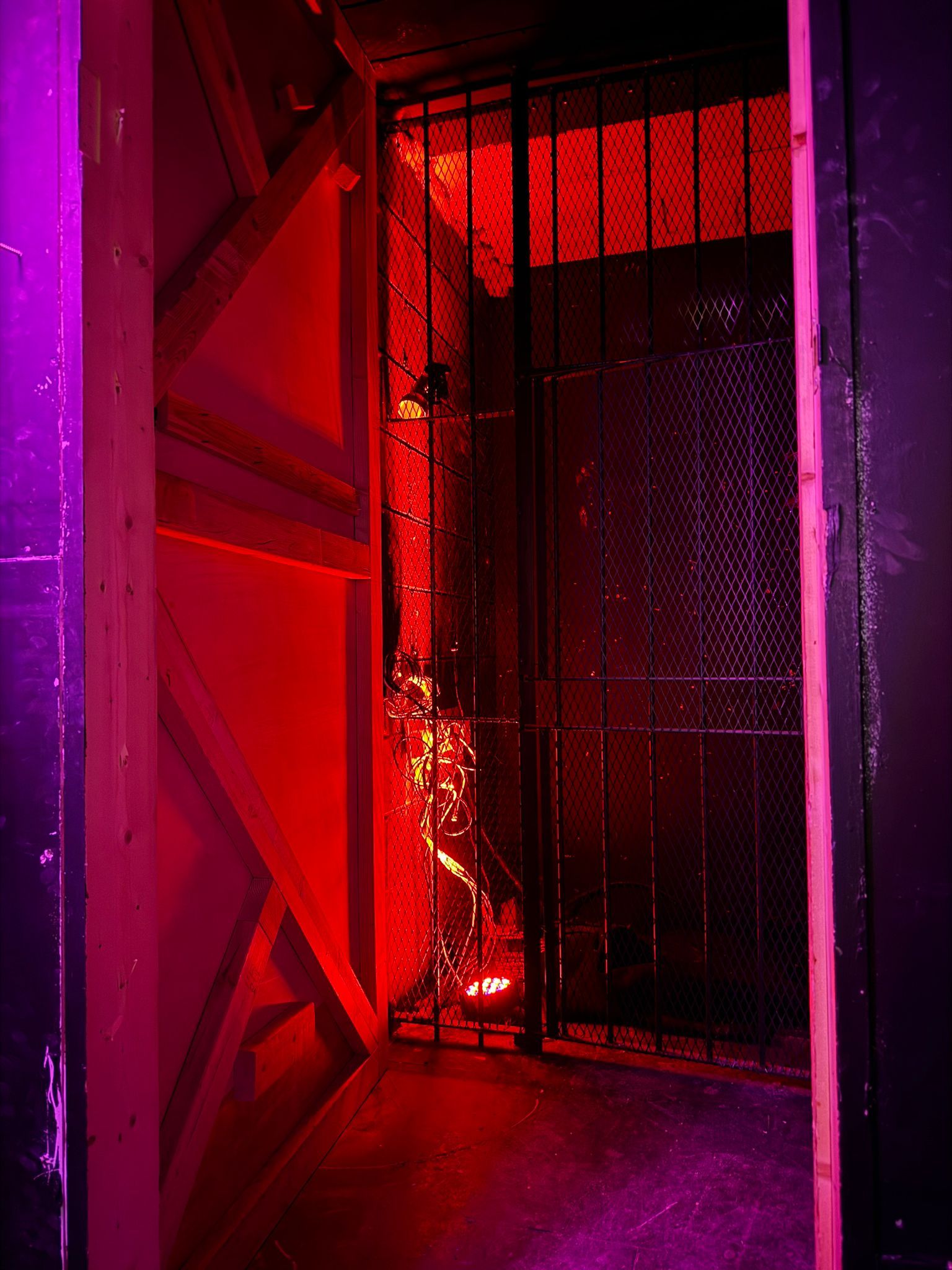
A rough surface gives a light source somewhere to land. Side light reveals the edges of brickwork. A narrow beam picks up a steel frame. Coloured light falls unevenly across concrete, creating gradients, shadows and tonal shifts without needing a printed backdrop.
That texture reads on camera. It gives the eye somewhere to move.
For a photographer, it creates a background with its own structure. For a director, it adds atmosphere to a wide shot. For a brand, it gives the campaign a stronger visual identity than another image against a seamless white wall.
The key is not to light every surface equally. Let parts of the room disappear. Keep some areas dark. Use contrast.
At @38, the industrial aesthetic is built around deep shadows and controlled colour: cyan, magenta, violet, red and warm amber against charcoal and midnight tones.
The result changes with the lighting plan. The architecture remains.
The building is the set
This is the practical case for raw industrial spaces.
No set build required.
You can arrive with your camera, lights, talent, products and styling. The space already gives you a visual starting point. You might add a chair, a table, a soft textile or a chrome prop. You do not need to construct a complete environment to make the frame feel considered.
That matters when time is tight.
If you have booked a half day of shooting, every hour spent assembling a fake wall is an hour you are not shooting. If the production has multiple looks to capture, the difference becomes larger.
A raw space lets you spend that time on:
- Camera movement
- Lighting changes
- Wardrobe changes
- Product variations
- Interview takes
- Behind-the-scenes content
- Alternate crops for social
The architecture gives you a look before the first prop arrives.
Concrete, steel and brick give you range
Raw does not mean one-note.
The same industrial surface can support different treatments depending on how you frame and light it.
Keep it stripped back
Use the concrete floor, steel structure and brick walls with minimal styling. This works for music content, streetwear, documentary portraits and direct-to-camera pieces.
The room stays visible. The subject carries the story.
Push the contrast
Bring in sharp coloured light, reflective surfaces and darker wardrobe. Use the steel as graphic framing. Let magenta or cyan pick out the architecture while the rest of the room falls away.
This works for fashion, music videos and artist content.
Add softness against the hard surfaces
Concrete and steel become stronger when paired with something tactile. Velvet. Linen. Leather. Silk. A single soft object can create contrast without turning the room into a set.
This is useful for product campaigns, editorial work and portraiture. The background stays industrial. The styling gives it a different temperature.
Use the volume
Industrial rooms give you more than a wall. They give you distance, height and layers.
Shoot wide. Frame through a structural element. Move the subject away from the background. Use the foreground to create depth.
A white box can give you a clean horizon. A raw space can give you a whole composition.

Better for content days
The anti-white-box approach is not only about making one strong image.
It is also about making more content in one booking.
@38 offers a raw industrial main floor alongside a dedicated studio room. That gives you two contrasting environments without moving your production across London.
Record an interview in the controlled studio. Shoot stills against the brick and concrete. Capture a performance beside the steel structure. Film short-form content under coloured light.
Two looks. One booking.
For creators and brands working across multiple platforms, this matters. One session can produce a long-form video, short clips, stills, campaign assets and behind-the-scenes material.
The Content @38 setup is designed around that kind of flexible production. Sessions start from £175, while Shoots @38 start from £600 for a half day of up to four hours on the main floor.
Check the brief before you book. If you need a specific camera, lighting or audio package, confirm it in advance. But the starting point is already there: a space with two distinct visual environments and no scenic build to manage.
A stronger fit for modern brands
A white box says: this image could have been made anywhere.
That is sometimes useful. It can also make a campaign feel interchangeable.
Industrial spaces carry a sense of place. They feel connected to the city, to music, to making things, to late-night work and unfinished ideas. That can be useful for brands that want to look current without sanding away every rough edge.
The environment is especially suited to:
- Fashion and streetwear
- Music and artist campaigns
- Technology and design products
- Automotive and lifestyle content
- Interviews and podcasts
- Brand launches
- Editorial photography
- Social-first content
An industrial event space in London can also carry that identity into a live setting. @38 has a 170-person capacity, a full bar, staffing, security, Pioneer DJ setup and atmospheric lighting. Event packages start from £2,500 for an evening or weekend booking.
Your launch does not need to look like a conference room with branded panels. The concrete, brick and steel can do more of the visual work before guests arrive.

Raw does not mean unplanned
There is a difference between an industrial space with character and an empty warehouse with no production support.
The best results still need a plan.
Scout your angles. Decide which surfaces should stay in frame. Build a lighting palette before the shoot. Keep cable runs clean. Bring props that contrast with the architecture rather than hiding it.
If you are shooting people, check how the coloured light will affect skin tones. If you are recording audio, confirm the room and equipment requirements. If you are hosting an event, check capacity, timings and what is included.
Raw architecture gives you a strong starting point. It does not replace preparation.
That is the balance. The room has character, but your brief still leads.
For more on working with this kind of location, read the Hackney creative director’s guide to styling a raw industrial space or see the industrial photoshoot mistakes worth avoiding.
Choose the room that contributes
A white box is useful when you want the room to disappear.
Choose a raw industrial space when you want the room to contribute.
Concrete gives you weight. Steel gives you lines. Brick gives you texture. Controlled lighting turns those materials into different looks without covering them up.
At @38, the space is built for creators who need more than a white box. Podcast recording, DJ sessions, studio production, shoots, events and content days all happen under one address in Clapton · Hackney · London E5.
No fake walls. No unnecessary dressing. No starting from zero.
Team white-box or team raw?
Comment below and tell us where you stand. Then DM us if you want to view the space in person. We will show you the concrete, steel, brick and the corners that do the work on camera.
View the space · Book a shoot · We respond within 24 hours.
Leave a Reply