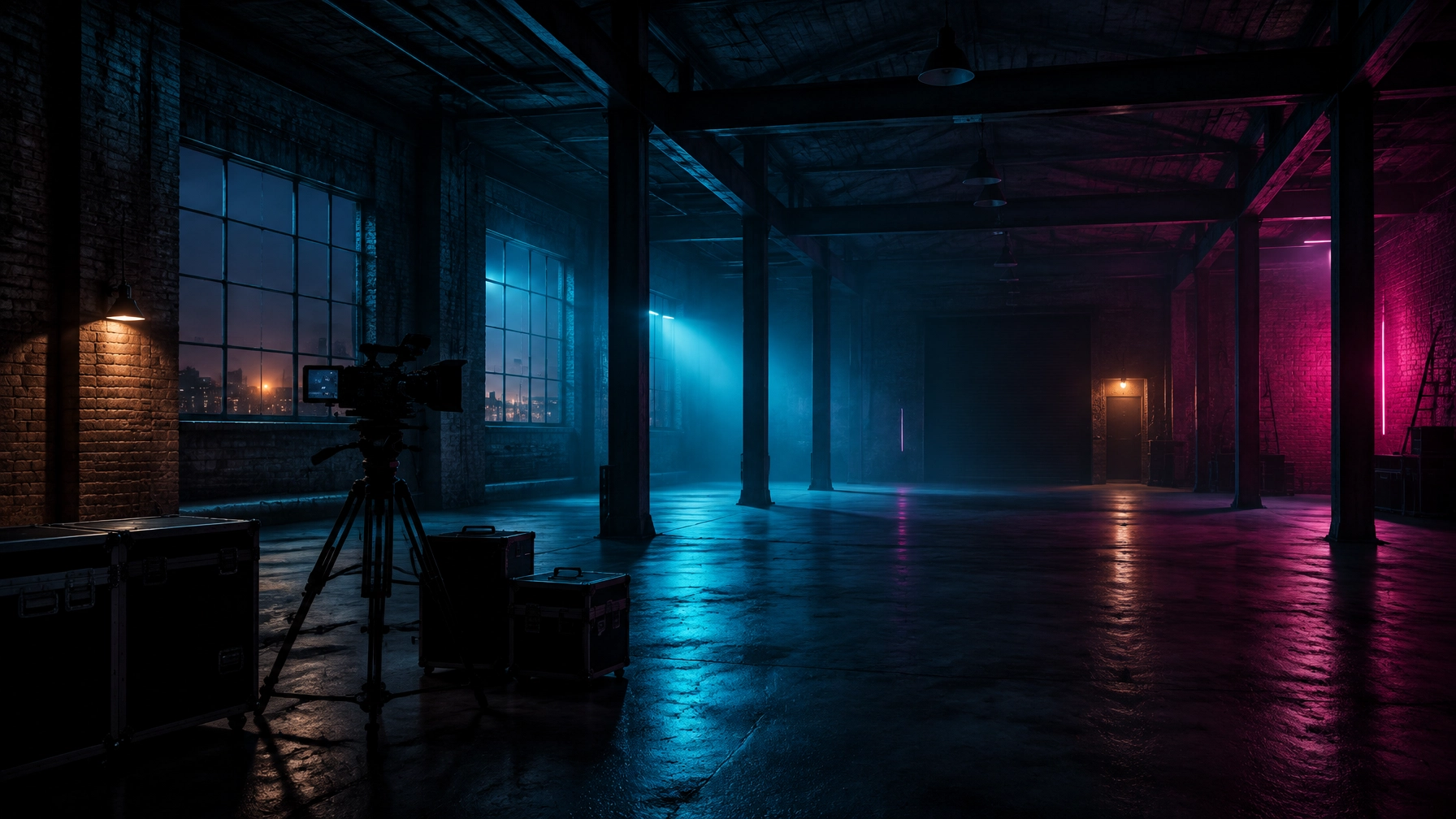
A warehouse can give your film texture before the camera rolls. It can also eat into the day if the plan stops at “we’ll work it out on the recce.”
For a smooth shoot, solve the practical questions before you book: where the camera goes, how equipment gets in, what power you need, where the crew waits, and which scenes need quiet.
Here’s a pre-production framework for planning a film shoot in a Hackney warehouse, from the first recce to the final load-out.
1. Recce with a floorplan, not just a camera
A location can look right and still be awkward to shoot. The recce is where you test both.
Walk the space with your director, DP, gaffer, sound recordist and production designer if you can. Bring the shot list. Mark the scenes you intend to shoot in each area, then check whether the room can actually support them.
Build a simple floorplan that shows:
- Camera positions and likely angles
- Cast marks and movement
- Lights, stands and grip equipment
- Power points and cable routes
- Crew working areas and clear walkways
- Holding, changing and makeup areas
- Doors, exits and access routes
Take wide photos from each proposed camera position. Check what sits behind the action, not just what’s in front of it. A column, doorway or bright window can become a problem once you frame the shot.
A floorplan doesn’t need to be elaborate. It needs to help everyone arrive with the same picture of the day.

A useful starting point is this location data sheet and recce checklist. Adapt it to your production and confirm every technical detail with the venue before shoot day.
At @38, you can recce a raw industrial space in Clapton · Hackney · London E5. The main floor and studio room sit across two connected spaces, with a stated capacity of 170 people. The scale gives you room to plan the shooting area and the work happening around it.
2. Plan power and load-in before you book
The load-in starts before the warehouse door. Measure the full route from vehicle access to the shooting area. Check door widths, stairs, turns and any pinch points. Ask about parking and delivery access; at @38, parking is available by arrangement.
Send the venue a list of what you plan to bring: lighting, camera kit, monitors, chargers, practicals and anything else that draws power. Ask which outlets and circuits are available, and confirm the permitted setup with the venue and your gaffer. Don’t assume that several sockets mean several separate circuits.
Then draw the cable routes onto your floorplan. Keep them away from exits and working traffic where possible. Where cables cross a walkway, plan suitable protection. Keep the route from the van to the set clear so cases don’t end up stacked where the crew needs to move.
@38 has power throughout, track lighting and a dramatic lighting rig already present. Confirm what’s included for your booking and what your production needs to supply. The infrastructure is there to help you plan; it doesn’t remove the need to check the technical requirements of your shoot.

3. Lock your sightlines and camera positions
A strong-looking room gives you options. A camera plan helps you use them.
For each setup, mark the camera position, lens direction, cast marks and lighting positions. Then walk the proposed path. Can the camera move without crossing the crew’s main route? Can you change the angle without capturing equipment staging, an open door or a busy holding area?
Think about the shot size, too. A wide frame may show more of the industrial character; a tighter frame may let you control the background and work faster. At @38, dark industrial surfaces, raw brick and existing lighting give you texture on camera without a set build required.
Ask the DP and production designer to identify any small changes that would make a big difference: moving a stand, shifting a chair or hiding a cable run. Set those changes before the crew is called. A few minutes of planning beats a collection of last-minute fixes.
4. Give the crew somewhere to go
The shooting area shouldn’t have to do every job at once. Separate the working set from the places people need to wait, prep and move through.
Decide where cast will hold between setups. Plan where wardrobe, hair and makeup, production bags, monitors and spare equipment will sit. Keep the main route clear from load-in to set. If you have multiple departments working at once, agree who owns each area and how the crew will know when a setup is ready.
At @38, the connected studio room can be used for talent or changing, subject to your booking. Full exclusivity means the space is reserved for your production, with no other bookings in the way. The two connected spaces help you plan a working area and a place for the rest of the day to happen.
Keep exits clear and make the emergency routes part of the plan. They’re not overflow storage.
5. Treat sound as part of the recce
Hard surfaces are part of the warehouse look. They can also throw sound back into the microphone.
Before you book, listen in the room. Record a short sample from the planned dialogue position, then listen for room reflections, outside noise, ventilation or anything that could interrupt a take. If possible, check at the time of day you expect to film; the sound environment can change.
Talk to your sound recordist about the script. Dialogue-heavy scenes may need a different setup from action, playback or silent coverage. Plan any soft furnishings or acoustic treatment your production requires and check where they can go without interfering with camera, lighting or access.
Build a few quiet windows into the schedule for dialogue. If you can’t control the sound, plan the day around it: shoot the most sound-sensitive scenes when the room is quiet, and use noisier periods for shots that don’t depend on clean dialogue.
6. Schedule around light and setup time
Don’t schedule only by scene number. Schedule by what each setup needs.
List the scenes that depend on daylight, then check where the natural light enters and when it reaches your chosen camera positions. Decide whether you want to use it, shape it or control it. If the look depends on a specific window or time of day, put that setup in the schedule first.
Give each lighting change and camera move enough time. A warehouse may offer multiple angles, but every new setup still takes time to dress, light, check and shoot. Keep a little space between demanding setups for sound adjustments, equipment moves or a take that needs another go.
A simple schedule can start with access and load-in, move into pre-light and blocking, then group scenes by location and lighting needs. Put the most time-sensitive setups first. Leave a clear window at the end for pack-down and a final check of the space.
At @38, you can book up to 8 hours for a shoot day. Shoot bookings start from £600. Shorter studio bookings start from £175 for up to 4 hours; confirm the right space and rate for your production. Check the shoot options or book a shoot.
A quick pre-production check
Before the shoot day, make sure you can answer:
- What’s the plan for each camera setup?
- How will equipment get from the vehicle to the set?
- Has the power plan been checked with the venue and gaffer?
- Where will cast and crew wait between setups?
- Which scenes need the quietest conditions?
- Which shots depend on available light?
- Is there enough time for setup, changes and load-out?
@38 gives you a raw industrial backdrop, production infrastructure already present, full exclusivity and two connected spaces to plan around. No set build required. The rest comes down to a clear recce and a schedule that gives the crew room to work.
Planning a film shoot in Hackney? Comment below with your pre-production question. DM us or book at at38.org. We respond within 24 hours.
Leave a Reply