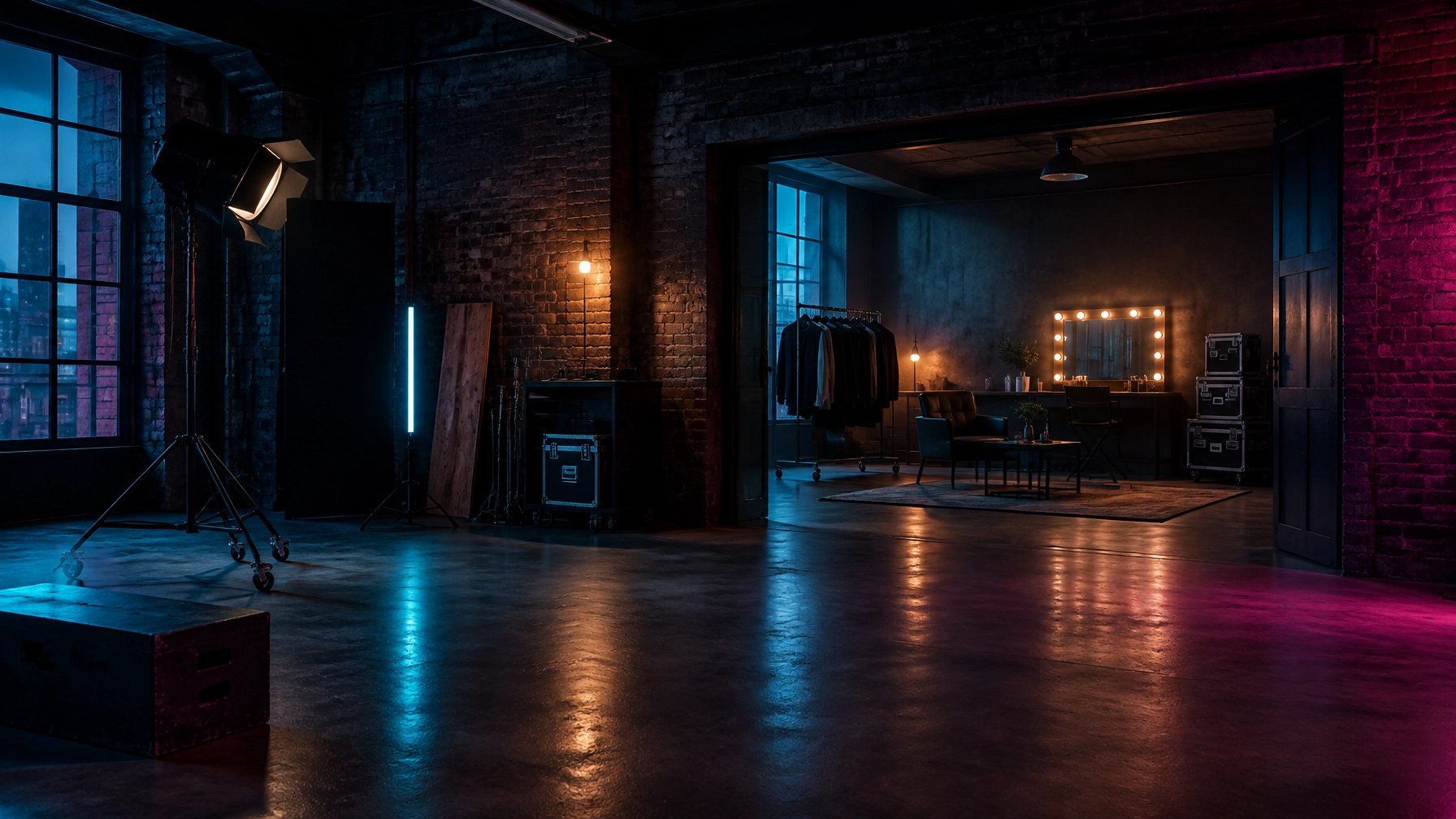
A second room isn’t spare space. It’s a way to keep your shoot moving while talent gets ready, clients review footage and kit stays off the set.
At @38, you can use two connected spaces as a main floor and a holding or prep room. You get full exclusivity for your booking, so the rooms work as one production base, not a shared space with other activity around you.
For the dedicated studio room, rates start at £175 for up to 4 hours, with bookings of up to 8 hours available. Main-floor shoot hire is priced separately; check the shoots page for current options.
One room shoots. One room keeps the day moving.
When everyone and everything has to fit on the main floor, small delays spread. Talent waits beside the camera. Hair and makeup pauses when the crew needs to reset. Cases creep into the frame. Clients step around stands to see the monitor.
A second room gives each part of the day somewhere to happen.
Use the main floor for the setup in front of the camera. Use the connected room for talent holding, preparation, wardrobe changes or a quiet client base. Keep equipment and bags in a designated area rather than in the shooting lane.
The point isn’t to fill every room. It’s to stop one task from blocking another.
Stagger call times by readiness, not habit
Calling everyone at the same time can feel safe. It can also leave talent waiting for hours while the crew finishes lighting or works through earlier shots.
Build the schedule backwards from each person’s camera time. Work out how long they need for hair, makeup, wardrobe and a final touch-up. Then set their call time around that, not around the general crew call.
For example, if Talent A needs to be ready for an 8:30 camera start, call them early enough for their prep and a small buffer. If Talent B is not needed until 10:00, give them a later call. They can arrive, prep and wait in the holding room while the first setup runs.
Keep the call sheet clear about the difference between arrival, hair and makeup, wardrobe, ready and on-set times. A call sheet guide can help you structure those details. Adjust the timings to your crew, look and production. There’s no useful universal call time.

A holding room only helps if people know when they’re needed. Give talent a clear contact for updates, and tell them where to wait. When the schedule shifts, one person can move the next ready person to set without sending a whole group onto the main floor.
Run hair and makeup while the crew builds the first setup
The first setup often needs attention before the first shot. Camera, lighting and art may be setting angles, checking exposure or adjusting the frame while hair and makeup work through the first talent.
Put those tasks in parallel. Let the crew prepare the main floor while talent gets ready in the second room. When the setup is close, bring the first person through for a final check.
Then keep the rhythm going: one person shoots, the next gets ready, and the following person waits off the main floor. If a look needs a touch-up or a wardrobe change, it happens without turning the active set into a prep station.
Agree the room setup with your team in advance. Decide where hair and makeup will work, where wardrobe changes happen, and where talent waits once they’re ready. A simple status list (arrived, in prep, ready, on set) can make handovers clear without adding another complicated production system.

Give clients and agency a base outside the set
Clients need to see the work. They don’t need to stand inside every camera reset.
A separate room gives the client or agency team somewhere to review options, check the schedule or take a call without adding traffic around the camera. It also gives the crew more room to work through changes.
Set expectations before the day: who can access the main floor, where the client team will be based, and how they’ll review images or video. If a live monitor is part of your production, decide where it goes and who is responsible for it. Don’t assume the holding area automatically includes a monitor or extra production equipment. Confirm what you need when you book.
Keep kit accessible, not in the way
Kit storage is a small decision with a big effect on room flow. Cases left beside the camera become obstacles. Items scattered across a prep area get harder to track.
Choose a clear, out-of-the-way area for cases and bags. Keep only the kit needed for the current setup near the working floor. Label shared chargers, wardrobe items and accessories, and agree who can move them.
Keep access routes clear. That matters when talent is moving between rooms and crew are carrying equipment. At wrap, do a final kit check before the last case leaves the building.

A sample schedule with room to flex
Use this as a starting structure, not a fixed template:
| Time | Main floor | Holding / prep room |
|---|---|---|
| 08:00 | Crew access and first setup | Hair and makeup prepare |
| 08:30 | Lighting and camera checks | Talent A starts prep |
| 09:15 | Shoot Talent A | Talent B starts prep |
| 10:15 | Reset or review | Talent C waits, ready to go |
| 10:30 | Shoot Talent B | Talent C gets final touch-up |
| 11:30 | Next setup | Talent A changes or is released |
The timings depend on your setup, number of looks, prep requirements and how many people can work at once. The useful part is the overlap: the next task can start before the current one finishes.
And when a shot runs long? Talent can wait somewhere comfortable and ready, rather than on the edge of the set. When the crew moves faster than planned, the next person can be called forward. That’s how a second room buys back the afternoon, not by magically shortening every task, but by stopping the whole schedule from waiting on one room.
Book a shoot space that works as a base
At @38, the dark industrial surfaces give the main floor its look without a white-box build. The connected room can handle holding and prep, keeping talent and support tasks off the active shooting floor. You book the space exclusively, so your team can plan the rooms around the shoot.
Find us at Clapton · Hackney · London E5. Studio-room bookings start at £175 for up to 4 hours, with bookings of up to 8 hours available. For main-floor shoot rates and details, visit Shoots @38. You can book a shoot or DM us with your format and date. We respond within 24 hours.
How do you run call times on shoot day: one general call, or staggered by talent and prep? Comment below with what works for your team. Then DM @38 or book at at38.org to plan your next shoot.
Leave a Reply