One idea rarely stays one piece of content.
A podcast episode becomes short clips. A DJ set becomes a livestream, stills, and a cover image. A brand interview needs a hero film, vertical edits, behind-the-scenes footage, and portraits of everyone involved.
Booking a different space for every format slows the whole thing down.
You lose time moving equipment. You lose consistency between locations. You pay for multiple setups when one well-planned session could cover the lot.
That is the point of a content creation day.
At @38, you can move between the raw industrial main floor and the dedicated studio room in one booking. Shoot video, record clean audio, capture stills, and leave with a library of material built around one visual identity.
One booking. Multiple looks. No white box.
What is a content creation day?
A content creation day is a focused studio booking built around batch production.
Instead of arriving with one video to shoot, you plan several outputs in advance:
- Long-form video
- Short-form vertical clips
- Podcast episodes
- Interviews
- Voiceovers
- DJ or music content
- Portraits and editorial stills
- Product or campaign images
- Behind-the-scenes footage
- Social thumbnails and cover images
You are not trying to make everything at once. You are using the same crew, talent, styling, equipment, and location to capture several formats in a controlled run.
That is the difference between a busy shoot and a productive one.
At @38, Content @38 starts from £175 for a half day of up to 4 hours, with both the main floor and studio room available. The space is in Clapton E5, with access from 08:00, Monday to Sunday.
Check the space and available sessions.
Start with the highest-value content
Do not begin the day with filler shots.
Start with the content that needs the most energy, concentration, or collaboration. This might be a filmed interview, a full podcast episode, a product campaign, or a live DJ recording.
Get the important material while everyone is fresh.
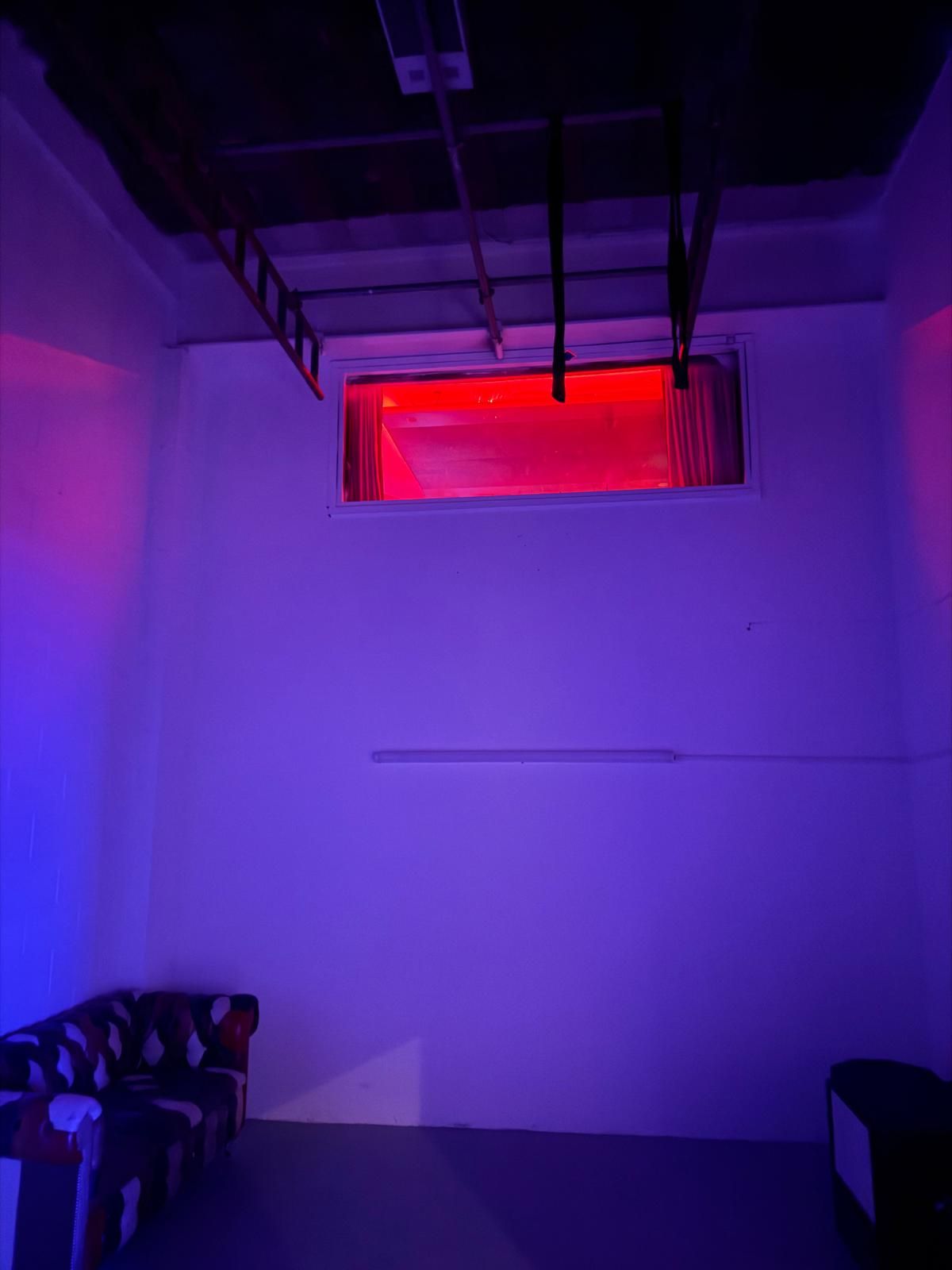
The main floor gives you the larger visual environment. Use the industrial surfaces, coloured lighting, steel structure, and open space to create movement and scale. It works for brand films, fashion content, music-led visuals, DJ footage, and social clips that need more character than a plain backdrop.

The DJ setup includes Pioneer CDJ multi-player decks, turntables, a professional mixer, full PA, and monitor system. If your content needs a performance element, the setup is already in the room.
No extra set build. No waiting for a blank studio to become useful.
You bring the concept. The space gives it a starting point.
Build two or three visual worlds
Batching does not mean every piece needs to look identical.
It means the content feels connected while giving your audience enough variation to keep watching.
At @38, you can create different looks without leaving the building.
Look one: raw industrial
Use the main floor for high-impact video, movement, performance, and wide shots.
This is the place for:
- DJ sets
- Music performance
- Fashion movement
- Brand films
- Product demonstrations
- Group interviews
- Behind-the-scenes footage
- Large-format social content
The dark surfaces and coloured lighting create depth in camera. You can shoot against the architecture, through the lighting, or close into the details.
You do not need to cover every wall with branding. Let the room do some of the work.
Look two: dedicated studio
Move into the studio room for interviews, podcast episodes, livestreams, and more controlled pieces to camera.
The room has controlled acoustics, twin broadcast-quality boom microphones, two Wassily chairs, and adjustable purple and red studio lighting. It is independent of the main floor, so you can change the pace and feel of the session without rebuilding the set.

This setup works well when the content depends on conversation. The audio stays central. The background has enough detail to feel considered, without pulling attention away from the speaker.
Use it for the serious interview. The long-form conversation. The solo recording sprint. The livestream that needs to sound clean and look consistent.
For more detail on the room and rates, visit Podcast @38.
Look three: details and stills
Save part of the session for stills and close-up footage.
You do not need a separate photo studio to capture useful supporting material. Shoot portraits in the chairs. Capture product details against industrial surfaces. Use the coloured light for campaign images, social covers, or press photography.

Shoot the details your editor will need later:
- Hands on the mixer
- Microphone close-ups
- Shoes on the concrete floor
- Cables, controls, and textures
- Talent moving through the space
- Product details under coloured light
- Crew working between setups
These images help fill a content calendar. They also give your editor options when a video needs a cutaway or a campaign needs a new thumbnail.
A simple four-hour content day plan
A half-day booking gives you up to 4 hours. The exact schedule depends on your crew, talent, equipment, and deliverables, but this is a useful starting point.
00:00–00:20 : Arrive and set up
Bring your shot list, scripts, styling, and file plan with you.
Do not spend the first 30 minutes deciding what to shoot. Confirm camera positions, check audio, test the lighting, and get everyone into place.
If you are working with a team, assign roles before the day. Someone should own the shot list. Someone should monitor audio. Someone should track which takes are usable.
00:20–01:50 : Shoot the main video
Capture the most important video first.
Record the hero interview, performance, brand message, or long-form piece. Then move into the supporting material while the setup is still active.
If you are filming social content, record several hooks and endings. Do not make every clip from scratch. Change the opening line, angle, or delivery while the subject is already in position.
01:50–02:40 : Move into the studio room
Change the visual language.
Record the podcast, interview, voiceover, or livestream segment in the dedicated studio. If the conversation is long, record the full episode first. Capture shorter introductions, sponsor reads, and vertical cutdowns afterwards.
Keep cameras rolling where possible. A single conversation can produce a full episode, short clips, still frames, and behind-the-scenes material.
02:40–03:40 : Capture stills and B-roll
Now collect the material that makes the main content easier to publish.
Shoot portraits, product frames, room details, vertical footage, wide shots, and crew content. Change the lens, position, or lighting treatment before changing the entire setup.
This is where a video production studio London creators can use for multiple formats becomes useful. You are not only filming one finished asset. You are building the raw material for a month of publishing.
03:40–04:00 : Review and back up
Check the key takes before you leave.
Confirm that the main interview recorded correctly. Check the podcast audio. Review your stills and make sure the essential shots are there. Back up the files before the day is over.
A content day is only productive if the footage survives the handover.
Plan the outputs before you book
The booking is the easy part. The useful work happens before it.
Write down what you want to leave with. For example:
- One 30-minute filmed interview
- Six vertical clips
- One podcast episode
- Ten portrait and detail stills
- A set of behind-the-scenes images
- Three thumbnail options
- One short brand introduction
Then work backwards.
Which format needs the main floor? Which needs controlled audio? Which talent needs to be present? What can be captured while the lights and cameras are already set?
If you arrive with one vague idea, you will probably leave with one vague video.
If you arrive with a clear list, the same four hours can give you a complete content batch.
Why use a creative space in East London?
Location affects the work.
A plain room can be practical, but it often needs styling, set dressing, backdrops, and extra lighting before it looks like anything. That costs time and crew budget.
A raw industrial creative space East London creators can use gives you a different starting point. The surfaces already have texture. The lighting already has atmosphere. The main floor already supports performance, movement, and larger setups.
At @38, the podcast, DJ, studio, shoot, event, and content uses sit under one address.
You can record clean audio in the studio room, then move to the main floor for performance footage or stills. The visual identity stays connected, but the content does not feel repetitive.
That is the advantage of batching in a space with more than one look.
Book your content day at @38
Content @38 is available from £175 for a half day of up to 4 hours. Both spaces are available, with the raw industrial main floor and dedicated studio room ready for different parts of your production.
Clapton · Hackney · London E5
Bring your camera team, your talent, your shot list, or just the idea you want to build out. We respond within 24 hours.
Check your date or DM us with what you are making.
And tell us in the comments: what would you batch-produce first : video, audio, stills, or all three?
Leave a Reply