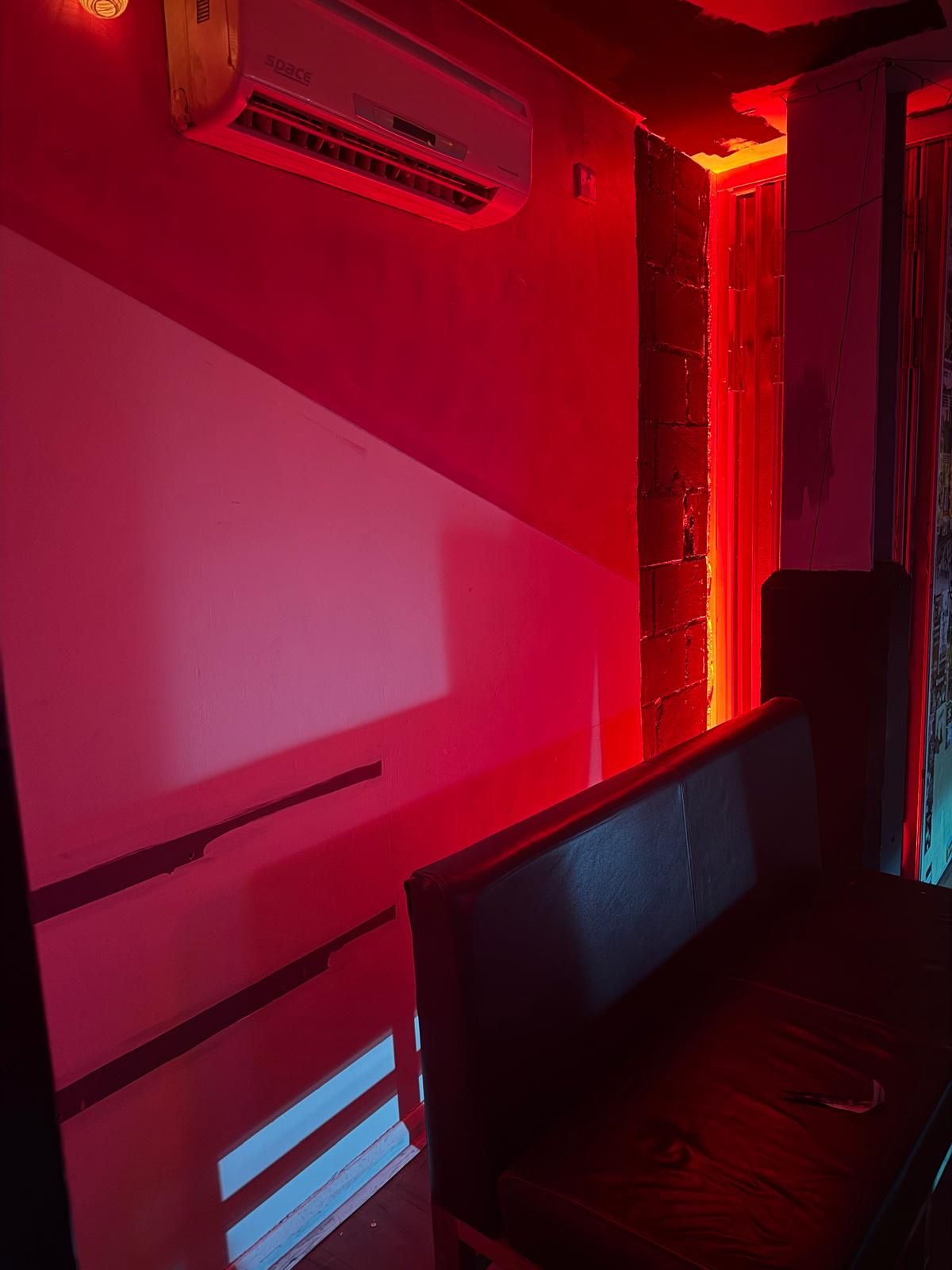
A white studio gives you control. It also gives you the same image everyone else can make.
Fashion and music brands are moving towards spaces with more weight: exposed brick, steel structures, concrete floors, deep shadows and lighting that already has a point of view. Not because white studios are useless. They still work for clean e-commerce, pack shots and repeatable catalogue images.
But campaigns need more than consistency.
They need a setting that says something before the model, product or artist enters the frame.
That is why raw industrial spaces are becoming the first choice for editorials, music videos, brand films and campaign content across East London.
At @38, the space is built around that shift. A raw industrial creative venue in Clapton E5, with dramatic coloured lighting, exposed surfaces and no set build required.
The white box has done its job
White studios are useful when the background needs to disappear.
They give photographers a neutral surface. They make colour correction straightforward. They keep attention on the garment or product. For high-volume product photography, that control matters.
The problem comes when every image starts to look interchangeable.
A white wall does not bring history, tension or atmosphere. Your creative team has to supply all of it through lighting, styling, props and set construction. That can work. It can also add hours to the production schedule and another line to the budget.
For a campaign with a stronger visual direction, the room should already be doing some of the work.
A raw industrial location gives you that starting point.
Texture gives the camera something to hold
Exposed brick is not just a backdrop. Steel is not just structure. Concrete is not just flooring.
These surfaces catch light differently. Brick breaks up a wash of colour. Steel creates sharp lines and reflections. Concrete absorbs light and gives darker frames more depth.
The result is an image with layers.
A model in a white studio might need a constructed wall, a painted floor and several props to create context. In an industrial space, the architecture can provide those details immediately. The frame feels lived-in without looking over-designed.
This is one reason an industrial photoshoot location in London works well for fashion and music campaigns. The setting brings its own visual language.
Hard materials against soft fabrics. Glossy products against weathered surfaces. Clean silhouettes against rough walls.
The contrast is built in.

Why fashion brands are choosing industrial locations
Fashion imagery needs to show the clothes clearly. It also needs to create a world around them.
Raw spaces give stylists more options without requiring a full set build. A long coat can move against a concrete wall. Technical fabrics can sit against steel. Jewellery can pick up coloured highlights from a dark background. A minimal silhouette can hold the frame because the architecture gives it scale.
You can keep the styling stripped back and let the materials carry the image. Or you can create a sharper contrast with silk, colour, chrome, reflective surfaces or saturated wardrobe.
The space does not dictate one look.
It gives you room to build several.
That matters when a shoot needs campaign stills, social cutdowns, behind-the-scenes content and moving image from the same booking. You can change the wardrobe, lighting direction and camera position without changing location.
At @38, the main floor is designed for that kind of flexibility. Use the industrial surfaces as they are. Add your own props. Change the colour palette. Keep the frame dark and controlled, or push the lighting harder.
No fake walls. No waiting for a set to dry. No four-hour build before the first shot.
Music visuals need atmosphere
Music brands and artists have a different problem from product teams.
The image needs to feel like the sound.
A clinical white studio can be useful for a performance video or press shoot, but it often needs heavy lighting, projection or set dressing to create mood. An industrial space starts closer to the finish line.
Deep shadows suit darker production. Steel and concrete give electronic, hip-hop, rock and alternative visuals a physical edge. Coloured light can divide the frame into zones without adding walls or scenery.
You can shoot a full performance on the main floor, move into a tighter corner for portraits, then capture detail shots around the structure and surfaces. One booking. Several visual environments.
That is the practical advantage of a venue with character.
The backdrop is not only something behind the subject. It becomes part of the visual identity.

Dramatic lighting without overbuilding the scene
Raw architecture needs intentional lighting.
Flood the whole room and the texture disappears. Light the subject and let the background fall away, and the space gains depth.
At @38, the dark industrial aesthetic works with low-key lighting, coloured accents and strong contrast. Magenta, red, blue, cyan and amber tones can pick up different surfaces across the room. A steel edge catches a highlight. Brick holds a warmer glow. Concrete recedes into shadow.
This gives you a more controlled kind of drama.
Not random darkness. Not a room that is simply underlit.
A considered lighting plan can create two completely different looks in the same space:
- A cold blue setup for a performance or streetwear campaign.
- A red and amber setup for portraits, artwork or a night-time brand film.
- A narrow spotlight for product detail.
- A broad wash for group movement and wider compositions.
You can also bring your own lighting team and work with the room’s existing character. The important part is that you are starting with an environment that already has depth.
No set build means more time for the work
Set builds are not automatically bad. Sometimes the concept needs one.
But if the goal is texture, scale and atmosphere, building a fake industrial wall inside a studio is the long way around.
You pay for materials. You pay for labour. You lose setup time. Then you still need to light the set so it looks convincing.
A raw venue removes that step.
At @38, the exposed brick, steel, concrete and industrial architecture are already part of the space. You can arrive with your camera kit, styling, lights and crew, then start shaping the frame.
The venue’s own industrial shoot guide covers the practical side: use raking light to bring out surface detail, keep the shadows, and work with the architecture instead of hiding it.
The building is the set.
Use it.
One booking. More than one visual world
A strong content day rarely produces one type of asset.
You may need:
- Hero campaign stills.
- Short-form video.
- Artist portraits.
- Product details.
- Press images.
- Behind-the-scenes footage.
- Interview or social content.
Moving between locations for each look costs time. It can also make the campaign feel disconnected.
A flexible creative venue lets you keep the same production team, styling and kit while changing the visual treatment. Shoot on the main floor, use a darker corner for close-ups, then move into a more controlled area for interviews or media content.
@38 also offers content creation bookings that can combine the raw industrial main floor with the studio room. Two different environments in one booking.
For a photographer or creative director, that means less resetting and more usable output.
For a brand, it means more content from the same production budget.

What to consider before booking a raw industrial space
Raw does not mean unplanned.
Before you book, check:
1. How the light behaves
Ask where the existing light comes from and whether you can control it. Decide whether you want to work with the ambient colour or replace it with your own lighting plan.
2. How many looks you can realistically shoot
Build a schedule around the zones already available. Avoid planning five major resets in a four-hour booking.
3. What the surfaces do on camera
Concrete, brick and metal can look completely different depending on lens choice, angle and light direction. Review the space properly before the shoot.
4. Whether the booking is exclusive
Shared spaces create interruptions. Full exclusivity gives your crew the room to work without other bookings moving through the frame.
5. What you actually need to bring
If the venue already provides the visual character, bring fewer construction materials and put the budget into styling, lighting and crew.
For more guidance, The Location Guys explain why warehouses work so well on camera: scale, texture and built-in character give campaigns more to work with before production begins.
Book the raw look in Hackney
If you are looking for a photography studio in Hackney with more character than a white box, @38 gives you a ready-made industrial environment for fashion, portrait, product, editorial and music content.
Shoots @38
- Clapton E5 · Hackney · London
- Exposed brick, steel and concrete surfaces
- Dramatic coloured lighting
- Main floor for photo and video production
- No set build required
- Full exclusivity
- From £600 for a half day
Book a shoot or check the space.
We respond within 24 hours.
The white studio is not dead. It is just not the only option.
Use a white studio when you need a neutral background.
Use an industrial space when you need the background to carry weight.
Fashion and music brands are switching because audiences can feel the difference. Raw materials add texture. Dramatic light adds mood. A real space gives the campaign somewhere to exist.
And when the architecture is already doing the heavy lifting, there is no reason to build a fake version of it.
Why are you moving away from white studios? Comment below and tell us what you want more of in your next shoot : texture, scale, atmosphere or something else. Then DM @38 to check your date in Clapton E5.
Leave a Reply