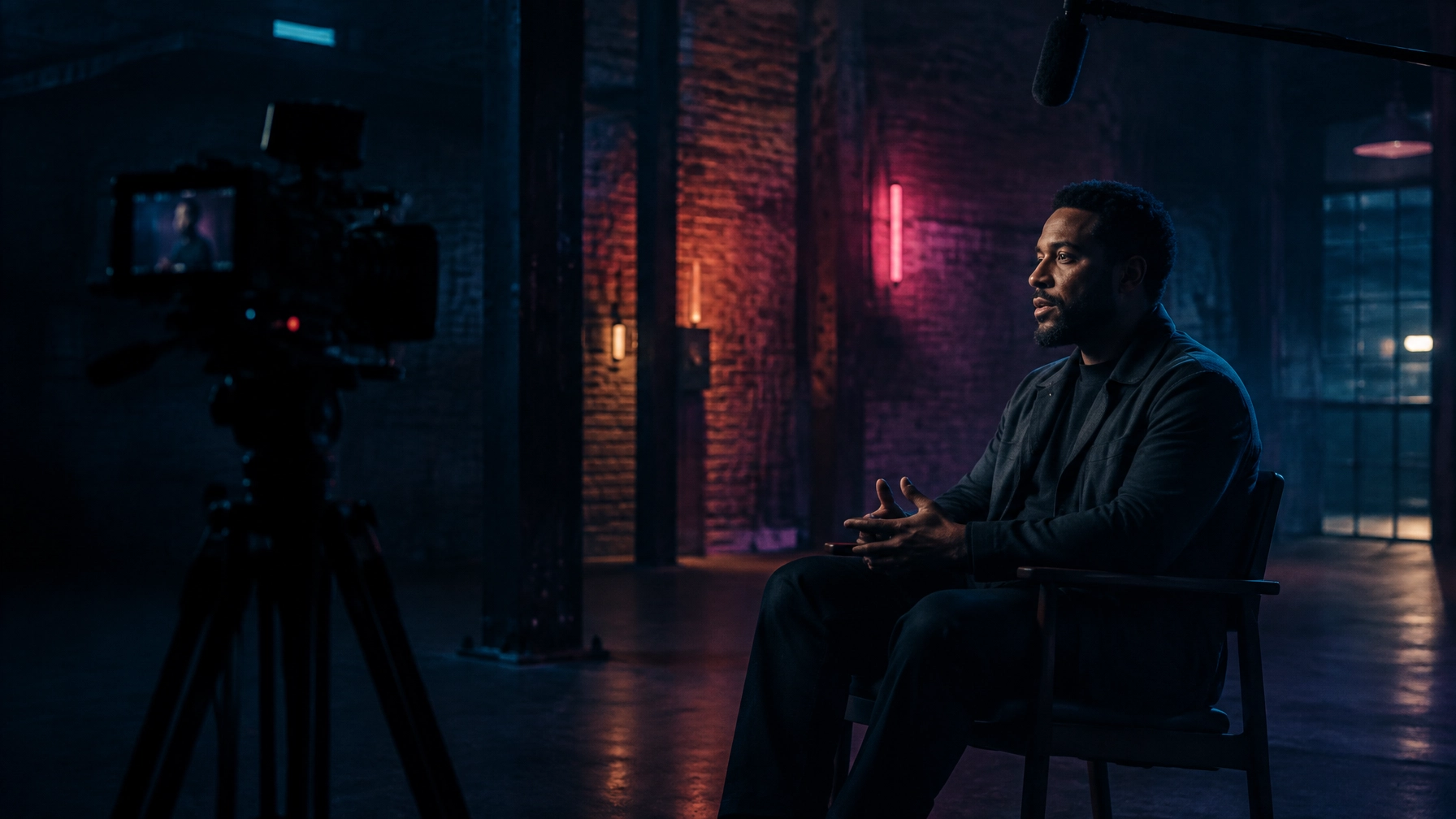
From £175 for up to 4 hours. Up to 8 hours available. At @38, you can film in two connected spaces: a dedicated studio room with controlled acoustics, and a raw industrial main floor with dark surfaces and atmospheric lighting. No set build required.
If you’re searching for a video production studio in London or a recording studio in Hackney for a sit-down interview, start with three things: where the camera goes, how you’ll capture clean dialogue, and how you’ll shape the light. Get those decisions right, and the room’s brick, timber and industrial details become part of the frame, not a problem to hide.
Find the frame before you light it
Don’t set the chair against the first interesting wall you see. Give the subject some distance from the background. Even a couple of metres can add depth, soften the texture and give you more control over how much light reaches the wall.
Place the camera slightly across the background rather than square-on. Brick lines, timber, beams and other surfaces can create depth when they lead into the frame. Keep the subject off-centre if they’re looking towards an interviewer, and leave space in front of their eyeline. For direct-to-camera delivery, a centred composition may feel more natural.
A medium close-up is a useful starting point for a talking-head interview. Keep the eyeline near the lens and check the edges of frame for distracting highlights, visible cables and equipment you don’t want on camera. The warehouse can provide plenty of texture; you don’t need to include every detail in every shot.
Before the full interview, roll a short test. Ask your subject to speak, turn their head and gesture as they normally would. Check the framing, focus and exposure while they move, not just while they sit still.

Boom or lav? Listen to the room
Industrial rooms can have hard surfaces that reflect speech. That reflection may sound like an echo or a hollow ring in your recording. The closer your microphone is to the speaker, the more clearly it can capture their voice compared with the sound bouncing around the room.
For a seated interview, a boom microphone just outside the top of frame is often a good first choice. Position it above and slightly in front of the subject, aimed towards their mouth. Keep it as close as your frame and lighting allow. A microphone left several feet away will hear more of the room along with the voice. RØDE’s interview audio guide also recommends a boom or lavalier for a stationary talking-head setup.
A lavalier microphone clipped to the subject gives you a compact option, and it can work well when the boom can’t stay close. But check for clothing rustle, cable taps and changes in sound when the subject turns. If you can, record both: boom as your main track and lav as backup. Monitor them on headphones before rolling.
A mic choice won’t fix every room reflection. Listen in several positions before you start. If a spot sounds especially live, try a different position or add practical acoustic control close to the speaking area: a rug underfoot, or suitable blankets or panels near reflective surfaces. Keep all treatment clear of exits, fire equipment and crew routes. Record a short test and a few seconds of room tone so you know what you’re working with in the edit.
For more on boom placement, see RØDE’s guide to boompole use and best practices.

Light the face. Keep the room in control.
Start with a soft key light to one side of the camera and slightly above the subject’s eye line. Aim it at the face, not the entire room. A flag, grid or careful adjustment can help limit spill on the wall behind them.
Set exposure on the subject first. Then decide how much of the background you want to see. Keep it dark enough to separate from the face, but not so dark that all the texture disappears. A restrained edge light or coloured practical can pick out a section of brick or timber without flooding the whole space.
Watch reflective surfaces. Metal, glass and polished areas can throw bright hotspots back into the lens. Move or flag the light, change the camera angle, or soften the source. Check the image on your monitor at the exposure you’ll actually record; the room may look different to camera than it does to your eye.

Use the space you have
A raw location doesn’t need to become a constructed set. Choose a backdrop that supports the story. Exposed brick and dark timber can give a campaign interview a strong visual identity. The cleaner studio room can suit a more neutral talking-head setup. In the industrial space, a controlled wash of colour can shift the mood without changing the location.
At @38, you can move between two connected spaces in one booking: the dedicated studio room, and the industrial main floor. The studio room is suited to interviews and media production, with controlled acoustics. The main floor brings dark industrial surfaces and atmospheric lighting. A Pioneer DJ setup is also available if it fits your story or you want music-related details for cutaways.
You get different visual options without building a backdrop from scratch. See the Studio @38, Shoots @38 and Content @38 pages for the room and booking details.
A quick interview setup check
Before your subject arrives, confirm the basics:
- Frame: Choose the subject’s eyeline, background and camera position.
- Sound: Listen on headphones. Test the boom and lav, if using both.
- Room: Check for HVAC, nearby activity and other noise that may interrupt takes.
- Light: Shape the key on the face and control spill on the background.
- Movement: Record a short test with natural speech, head turns and gestures.
- Backup: Check recording levels, available media and room tone before the first question.
A clean interview doesn’t depend on hiding every industrial detail. It depends on making deliberate choices about which details make the frame, and which sounds make the recording.
Film your interview at @38
@38 is in Clapton · Hackney · London E5. Studio room bookings start at £175 for up to 4 hours; bookings of up to 8 hours are also available. Check rates and room details on the Studio @38 page, or book the studio. We respond within 24 hours.
What’s your interview setup: boom, lav, or both? Comment below with the camera, sound and lighting choices you’d use in a warehouse. To plan your shoot, DM @38 or book at at38.org.
Leave a Reply