November in London gives you less daylight to work with each week. Sunset moves from around 4:33pm at the start of the month to about 3:55pm by the end. And that’s before cloud, narrow streets or neighbouring buildings take their share.
If you’re planning a winter shoot, build the schedule around the light you can actually use, not the daylight you hope might show up. Then decide what needs natural light, what can be lit indoors, and what you can shoot after dark.
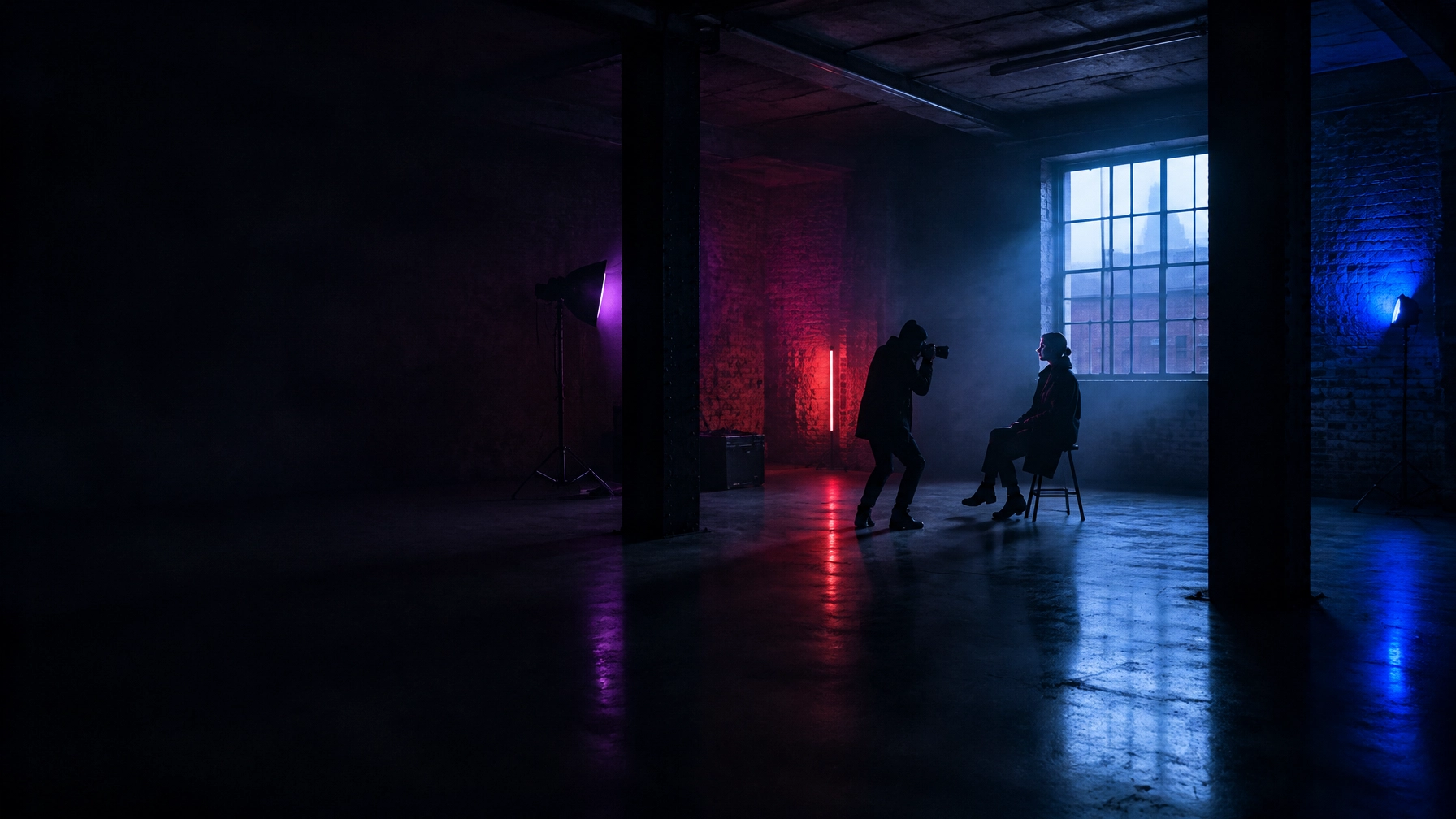
At @38, you can book a dark industrial interior with exposed brick, steel and concrete, plus atmospheric purple, red and blue lighting. From £175 for up to 4 hours. Up to 8 hours available. Find the details on our shoots page.
London winter light doesn’t wait
The trouble isn’t just the early sunset. London winter light can be low, flat and inconsistent. A bright morning can turn grey by lunch. A promising shaft of sun can disappear behind a row of buildings before your subject is ready.
In November 2026, London sunset is around 4:33pm on 1 November and around 3:55pm on 30 November. Civil twilight continues after sunset, but the quality of the light changes quickly. Use the London November daylight table to check the dates you’re planning around.
That gives you a moving target. Your best natural-light window might be a soft morning glow through a high window, or a brief warm stretch in the afternoon. Either way, travel, setup and talent changes eat into it.
Don’t plan a winter shoot as if you have a long summer afternoon. Choose the shots that depend on daylight first. Then give the rest of the day a lighting plan that doesn’t depend on the weather.

Plan the shortest daylight window first
Start with the shots that genuinely need natural light. That might be a product image where you want a particular window reflection, a portrait with soft ambient light, or a sequence that needs to match an existing daylight scene.
Put those shots at the front of the call sheet. Be specific: name the setup, the talent, the camera position and the approximate time you want to start. “Shoot portraits before lunch” leaves too much room for drift. “First look at 9:00, window portraits by 9:30” gives the crew something to work to.
Next, build in the things that can quietly push you behind:
- Access and unload: Get cases, stands and clothing into position before the key light arrives.
- Set and camera checks: Confirm framing, exposure and focus before talent is on set.
- Hair, makeup and wardrobe: Let the team prep while the room and equipment are being set.
- Travel and changeovers: If you’re using two setups or two spaces, include the move in the schedule.
- Weather and building shade: Have an indoor lighting alternative ready. Don’t wait until the light disappears to invent one.
For a short booking, decide what is essential and what can be cut. A focused shot list beats an ambitious one that runs out of daylight halfway through.
Use indoor light as the plan, not the backup
Once daylight fades, you don’t have to stop shooting. You need a setup you can control.
A blackout-capable interior helps you shape the light without fighting a changing window. You can hold a look from frame to frame, keep continuity between setups and repeat the shot if you need another take. Full light control also makes it easier to build distinct images during one booking: a clean portrait, a saturated editorial look, then a darker campaign frame.
The important bit is to test the lighting before the shoot day. Decide which sources are doing the work, where they sit, and how the colour should read on camera. Check the result on the camera monitor rather than relying on how dramatic the room looks to your eye.
At @38, the dark industrial surfaces give the light somewhere to land. Exposed brick, steel and concrete hold colour and texture without another set build. Purple, red and blue lighting can become part of the image, not a workaround for a grey afternoon.

A dark interior is not a compromise
A winter shoot doesn’t have to imitate summer. Darker interiors can give you a more deliberate image, with deeper shadows, controlled colour and visible texture. Instead of chasing the last strip of daylight, you can choose a look and keep it consistent.
That’s useful for fashion, portraits, music visuals and product work where mood matters as much as an even, bright background. Brick and concrete create texture in the frame. Steel adds hard lines. A wash of red or blue can shift the same corner into a different scene.
It also means you don’t need to spend the first hour building a backdrop. Choose your angle, place the subject and shape the light. Keep the composition simple. Let the space do some of the work.
The answer will depend on your brief. If the whole concept relies on a specific natural-light effect, schedule that first and check the weather. If the look can be created with controlled interior lighting, plan for that from the start rather than treating it as a rescue option.
Work the day in blocks
A clear shoot schedule helps you use both natural and controlled light without making every setup feel rushed. Try this structure:
Block 1: daylight-dependent shots. Start with the images you can’t recreate easily under artificial light. Keep the setup tight. Photograph the priority frames before moving on to optional variations.
Block 2: indoor transition. As daylight drops, move to the lighting setup you’ve already planned. Use the changeover to review images, adjust styling and reset the space.
Block 3: controlled looks. Shoot the frames that benefit from darker atmosphere, saturated colour or consistent exposure. You can repeat them without waiting for the sky to cooperate.
Block 4: final checks. Leave time to capture missing details, review the shot list and pack down. A rushed final ten minutes can undo a well-planned day.
For a short booking, arrive ready with the equipment and references you need. @38’s two connected spaces give you room to plan different parts of the shoot without trying to force every look into a single corner. The space is exclusive to your booking.

Book for the shoot you’re actually making
Before you book, write down three things: which shots need daylight, which setups can use controlled lighting, and how many changes of look you need. That tells you whether you need a focused session or more time for multiple setups and talent.
At @38, shoot bookings start from £175 for up to 4 hours, with bookings of up to 8 hours available. We’re at Clapton · Hackney · London E5. See the shoots space and booking details, or book a shoot. We respond within 24 hours.
Planning a winter shoot day? Comment below with your best tip for working around short daylight, whether it’s an early call, a tighter shot list or a lighting setup you can repeat. Then DM us or book at at38.org to check your date.
Leave a Reply