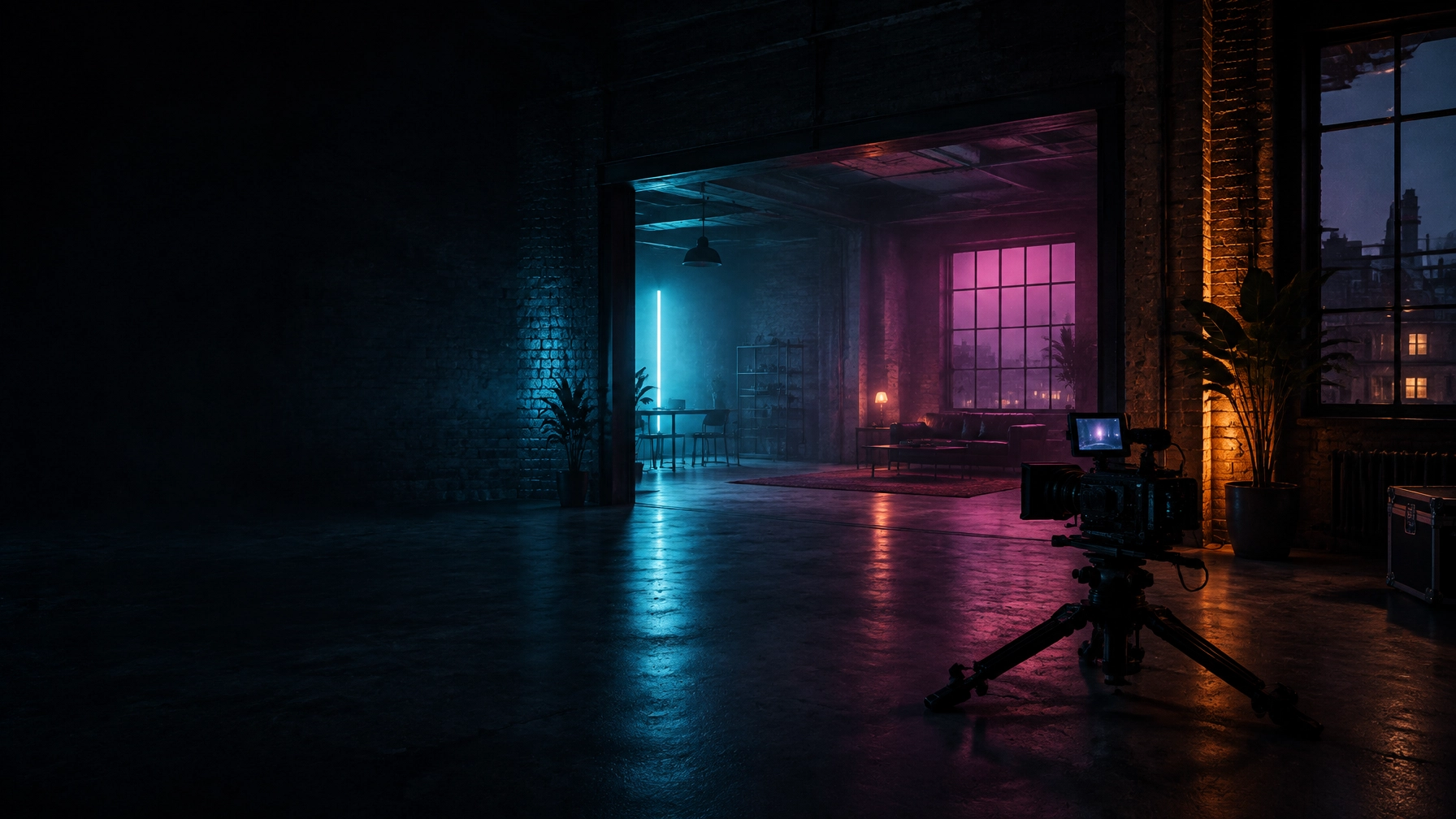
A film location is more than four walls and a booking confirmation.
You need to know when you can load in. Where the crew can reset. What power is available. Whether the green room is actually private. What happens when your 8-hour day becomes 9.
This is the part most location listings leave out.
If you are comparing film location hire in London or looking for a video production studio in London, use this guide before you sign anything.
Start with the hire rate
The base rate usually covers the space for a defined period.
That might be:
- Up to 4 hours
- Up to 8 hours
- A full production day
- A set number of crew members
- Exclusive use of one room or the full venue
The wording matters.
“Day hire” does not always mean 24 hours. It normally means a fixed access window agreed with the location. Your load-in, shoot, strike and exit all need to fit inside it unless you arrange additional time.
At Shoots @38, the main floor starts from £600 for up to 4 hours. Full-day access is available for up to 8 hours, from £1,100. The space is exclusive to your production during the booking.
For shorter interviews, livestreams and controlled media work, the independent studio room starts from £175 for up to 4 hours. Full-day studio room bookings are available for up to 8 hours.
That gives you two connected spaces to work with:
- A 170-capacity main floor with raw industrial surfaces
- An independent studio room for sound-sensitive work, talent holding or changing
The right option depends on your production. Not just your shot list.

What the location hire rate usually includes
Every venue sets its own terms. Get the inclusions in writing.
A standard film location or studio hire rate will often include:
Exclusive use
You should know whether your booking covers:
- One room
- The main floor
- Multiple connected spaces
- The entire venue
- A private green room
- Shared corridors or facilities
Exclusivity is not a minor detail. If another booking is happening next door, your sound, access and crew movement can all be affected.
At @38, the booking is exclusive during your session. No other production is using the space at the same time.
Standard access
The rate should state when you can enter and when you need to leave.
Ask whether the stated hours include:
- Crew arrival
- Equipment unloading
- Set dressing
- Camera tests
- Talent prep
- Strike and load-out
A shoot that starts at 9am does not help if you need 90 minutes to unload and build before the first setup.
Existing surfaces and fixtures
A raw location should give you something to shoot against without a full set build.
At @38, that means:
- Raw brick walls
- Dark wood floors
- Industrial metal and concrete textures
- Atmospheric coloured lighting
- Track lighting for your own equipment
- A built-in DJ booth and Pioneer DJ setup
- A studio room for talent, changing or controlled recording
The surfaces are already doing some of the work. You can arrive with a camera, lighting plan and wardrobe instead of building an entire environment from scratch.
Basic power
Standard power sockets are often included. That does not mean every production load is covered.
For a small crew, interview setup or photo shoot, normal sockets may be enough. Larger lighting packages, heaters, catering equipment and multiple charging stations can change the requirement quickly.
Ask for the power specification before booking.
Do not assume that “power throughout” means three-phase power, unlimited draw or permission to bring in a generator.
Toilets and basic facilities
These are usually included, but confirm what is available to your crew and talent.
Also ask about:
- Wi-Fi
- Water
- Kitchen access
- Heating
- Furniture
- Makeup stations
- Changing areas
- Waste disposal
The details become important after six hours on set.
What usually gets billed on top
The hire rate is only one line in the production budget.
These are the extras that catch people out.
Overtime
Overtime can apply to the space, the venue manager, security and cleaning team.
It may be charged by:
- The hour
- Half hour
- Part hour
- A higher late-night rate
Ask what happens if your crew is still packing down after the agreed end time. A final shot at 5pm can become a full overtime hour once the kit is off the floor.
Build strike time into the booking. Not just filming time.
Early access and late load-out
Early access is often a separate booking.
So is staying late.
If you need the space from 6am for lighting, or your van cannot leave until 10pm, put those hours into the initial quote. Do not rely on a casual agreement over email.
Confirm:
- Earliest load-in
- Latest load-out
- Whether doors open during your paid time
- Whether overnight equipment storage is possible
- Whether the venue manager must remain on site
Heavy power and technical support
Standard power and production power are different things.
You may need additional costs for:
- High-draw lighting
- Three-phase power
- Distribution boards
- Cable ramps
- An electrician
- A venue technician
- A generator and fuel
- Additional power usage
At @38, power is available throughout the production areas. Your equipment list still matters. Send it before the booking so the venue can confirm what is workable.
Security and supervision
Extra security may be required for:
- Large crews
- Overnight kit
- Public-facing shoots
- External doors
- Valuable equipment
- Late-night working
- Traffic and crowd control
Some venues also require a location manager or site representative to stay with the production. That person may be included, or they may be billed separately.
Ask who is responsible for opening, locking up and monitoring access.
Cleaning and reinstatement
Normal use should be clear.
So should abnormal use.
Extra charges can apply for:
- Fake blood
- Food and liquid spills
- Glitter and confetti
- Dust or powder
- Paint
- Mud
- Large amounts of production waste
- Wall or floor damage
- Furniture moved without permission
Take reference photos when you arrive. Leave the space as you found it. If you are planning anything messy, say so before the day.

The green room is part of the production
A green room is not just somewhere to put coats.
It can be used for:
- Talent holding
- Wardrobe changes
- Makeup
- Quiet breaks
- Client review
- Interview preparation
- Storing personal items away from the camera floor
Ask whether the room is private and whether it is included in the hire rate.
At @38, the studio room can work as a separate, controlled space for talent and changing. It can also support interviews, livestreams and sound-sensitive recording. That separation keeps the main floor available for lighting, crew movement and larger setups.
One room shoots. The other resets.
That is often more useful than a bigger single room.
Equipment already in the room
A location with existing infrastructure can save time. It can also create confusion if nobody confirms what you are allowed to use.
Ask for a clear list.
At @38, the production environment includes:
- Atmospheric coloured lighting
- Track lighting
- Power throughout
- Raw industrial surfaces
- A Pioneer DJ setup
- A studio room with controlled acoustics
- Existing furniture and visual elements, subject to the booking
The Pioneer setup can function as a working DJ station or a built-in visual element. If you need to move it, connect additional equipment or use it on camera, confirm the terms in advance.
You should also clarify what is not included:
- Cameras
- Lenses
- Tripods
- Grip
- Professional lighting kits
- Sound recordists
- Camera operators
- Production assistants
- Catering
- External generators
- Specialist set construction
The location provides the room and its existing infrastructure. Your production supplier provides the rest unless agreed otherwise.
Questions to ask before you sign
Send these questions before paying a deposit:
- What exactly does the hire rate cover?
- How many hours are included?
- Do those hours include load-in and load-out?
- Is the booking fully exclusive?
- Which rooms are included?
- Is there a private green room or changing space?
- What power is available?
- Are heavy power or technical support charged separately?
- What are the overtime rates?
- Can equipment be left overnight?
- Is parking available for vans?
- Are security or site supervision costs required?
- What counts as standard cleaning?
- Are external suppliers allowed?
- Is VAT included in the quoted rate?
- What deposit is required, and when is the balance due?
A good location should answer these directly.
At Book a Shoot @38, the booking process includes a 20% holding deposit to confirm the slot. Ask for the full booking terms before you commit.

Compare like for like
London location rates vary by size, postcode, facilities and production type.
Marketplaces such as Tagvenue, Hire Space and Peerspace can help you compare the market.
Do not compare hourly rates alone.
Compare:
- Total access time
- Load-in flexibility
- Exclusive use
- Green room access
- Power
- Existing lighting
- Parking
- Cleaning
- Overtime
- Travel from your base
- Whether you need to build a set
A cheaper room can cost more once you add equipment transport, set dressing, overtime and additional crew.
The location with the most useful infrastructure is not always the one with the lowest headline rate.
Book a space that is ready to shoot
You should not need to explain the same production details three times.
Tell the venue:
- Your shoot type
- Crew size
- Equipment list
- Access requirements
- Power requirements
- Talent and changing needs
- Planned finish time
- Any external suppliers
At @38, you get a raw industrial setting in Clapton · Hackney · London E5. Dark brick. Wood. Metal. Atmospheric lighting. Power throughout. Two connected spaces. No set build required for the right brief.
Shoot hire starts from £600 for up to 4 hours. The studio room starts from £175 for up to 4 hours. Up to 8 hours is available.
Book a Shoot Day or visit at38.org. We respond within 24 hours.
What is the one film location hire question venues never answer clearly? Comment below with your question. You can also DM @38 with your production brief and book through at38.org.

Leave a Reply